We have already been studying and learning about the righteous judgment of God based on the deeds of men. How God will render a righteous and accurate judgment based on a person’s lifestyle. We saw how this truth does not establish salvation by works but establishes the truth that those who are saved practice righteousness because of the work of the gospel in their lives. We are saved by faith alone but saving faith is not alone! If we have been saved by the gospel of the Lord Jesus Christ then we keep His commandments because of our love for Him as a result of His love for us. We love and obey Him because He first loved us and gave Himself up for us.
Now we come to this next portion in our studies and arrive at the truth that not only is God’s judgment righteous, it is also impartial. Now we must consider the truth that if God’s judgment is righteous that it must also be impartial. How can any judgment be righteous that shows partiality?
This is why in the book of James we read, “My brethren, do not hold your faith in our glorious Lord Jesus Christ with an attitude of personal favoritism. For if a man comes into your assembly with a gold ring and dressed in fine clothes, and there also comes in a poor man in dirty clothes, and you pay special attention to the one who is wearing the fine clothes, and say, ‘You sit here in a good place,’ and you say to the poor man, ‘You stand over there, or sit down by my footstool,’ have you not made distinctions among yourselves and become judges with evil motives? Listen, my beloved brethren: did not God choose the poor of this world to be rich in faith and heirs of the kingdom which He promised to those who love Him? But you have dishonored the poor man. Is it not the rich who oppress you and personally drag you into court? Do they not blaspheme the fair name by which you have been called? If, however, you are fulfilling the royal law according to Scripture, ‘You shall love your neighbor as yourself,’ you are doing well. But if you show partiality, you are committing sin and are convicted by the law as transgressors” (James 2:1-9).
Partiality means literally “to receive face,” that is to give consideration to a person because of who he is. So partiality is giving a favorable bias based on some prejudiced motive. God’s judgment is righteous and therefore will be impartial. God isn’t going to give anyone an advantage because of his or her intellectual insight, social standing, economic efficiency, ruling reputation, or highborn heritage. That is why we read this sobering truth – “Then I saw a great white throne and Him who sat upon it, from whose presence earth and heaven fled away, and no place was found for them. And I saw the dead, the great and the small, standing before the throne, and books were opened; and another book was opened, which is the book of life; and the dead were judged from the things which were written in the books, according to their deeds” (Revelation 20:11-12).
Since there is no partiality with God then neither heathen nor Hebrew will be shown any favoritism in either salvation or condemnation. God isn’t going to let the heathen slide because he did not have the Law and neither is He going to let the Hebrew slide because he did have the Law. Now this would come as a shock to many of Paul’s Jewish readers because they would have considered themselves deserving of special treatment because they were God’s chosen people entrusted with special revelation of God’s holy nature as revealed in God’s holy Law given to Moses.
Also to many of Paul’s Gentile readers the news that they would still be guilty before God without having had God’s special revelation of His Law would have come as a shock. They might have wondered how God could hold them responsible and not show them special treatment because of their ignorance of God’s written Law. However, the apostle Paul has already established the truth that all men everywhere are without excuse because they have knowledge of God’s holy character through both what has been created and through the inner conscience.
So let’s take a look at the impartial judgment of God on both groups – the heathen and the Hebrew.
First of all, the heathen who have sinned without the Law will perish without the Law (2:12a).
Paul here was appealing to the truth that the heathen have enough revelation of the Holy character of God through creation as well as the witness of right and wrong in their hearts and consciences and therefore are able to sin and know that it is sin without having God’s written Law. This is the truth that Paul established in 2:14-15 – “For when Gentiles who do not have the Law do instinctively/by nature the things of the Law, these, not having the Law, are a law to themselves, in that they show the work of the Law written in their hearts, their consciences bearing witness and their thoughts alternately accusing or else defending them.”
Not being able to live up to what they know is right but instead doing that which they know to be wrong makes those without God’s written Law accountable and guilty before God. Wherever you go you find people with an inner sense of right and wrong and a sense of sin because of not always living up to that which is right. Therefore, because of the light that they do have, the heathen who have sinned without the Law will perish without the Law.
The word “perish” pertains to destruction. It is referring to that which is ruined and no longer usable for its intended purpose. Therefore there is only one place suitable for such an object – the garbage dump. This garbage dump was referred to by the Lord Jesus Christ as Hell and the term He used was Gehenna (the garbage dump of Jerusalem where their worm does not die, and the fire is not quenched –Mark 9:48). It is the place of everlasting ruin, eternal torment, and unending death.
All sinners, whether sinning against a little or a lot of knowledge of God, must be saved through the Gospel of the Lord Jesus Christ or else perish in their sins. This is why we must proclaim the Gospel for it and it alone is the only remedy for sinful mankind.
Next we read, “And all who have sinned under the Law will be judged by the Law” (2:12b).
The Hebrew who had God’s written Law and sinned knowing God’s righteous character and standards will be judged by the Law. Those who have and know God’s written Law are under greater responsibility and therefore greater condemnation for their greater knowledge. God does not show partiality and therefore those with greater privileges have greater responsibility and will incur a stricter judgment. Though all unbelieving and unrepentant sinners will be in hell, the hottest part of hell will be reserved for those who have wasted the greatest opportunity.
The Hebrews supposed that because they had God’s Law and were hearers of God’s Law listening to it proclaimed and explained that they were better off than their heathen counterparts and that God would show them special favor because of it. However, the apostle made it clear that it is not the hearers of the Law who are just before God, but the doers of the Law will be justified (2:13). Now don’t let this verse throw you for a loop! Paul is not saying that we are justified by works of the Law – he is establishing the truth that no one can live up to the Law and therefore those who have God’s Law and are under God’s Law will be judged by the Law. This truth should immediately bring anyone who knows God’s Law to know that he or she cannot keep God’s Law and therefore he or she needs a Savior. Therefore the doers of the Law are those who come to God in repentance and faith, realizing that His Law is impossible for them to keep but that His Son did keep it and died to pay our penalty of not keeping it so that we could be justified by faith in His blood.
This is the purpose of God’s Law - to define sin and show that we are sinners and cannot do good because we are not good. If righteousness comes through the Law then Christ died needlessly (Galatians 2:21). And if a law had been given which was able to impart life, then righteousness would indeed be based on law (Galatians 3:21). So those who have the Law and know the Law should also know beyond any shadow of doubt that they are sinners and in need of a Savior. The Law is to lead us to Christ (Galatians 3:24).
And finally we read, “On the day when, according to my gospel, God will judge the secrets of men through Christ Jesus” (2:16).
Some men may be outwardly moral for the most part but still inwardly immoral. Many do not commit certain sins for fear of the consequences although they would have committed those sins if there had been no consequences. We are told that we are going to be judged by the law of liberty (James 2:12) – what we would have done that our hearts wanted to do if we had been at liberty to do them. God knows our secret intentions and will judge us accordingly.
Do we need a Savior who has never sinned in thought or deed to pay our debt and free us from sin’s penalty?
Showing posts with label judgment. Show all posts
Showing posts with label judgment. Show all posts
Monday, June 1, 2009


Monday, May 25, 2009
Righteous Judgment based on Deeds
The truth that God is going to righteously judge all men both believers and unbelievers according to their deeds/works comes as a shock to most professing Christians. However this truth is established over and over in the Bible and it is an absolute certainty whether we like it or not and whether we suppress it or not. We are told as Christians that our works will be tested by fire (1 Corinthians 3:13-15); and that we must all appear before the judgment seat of Christ, so that each one may be recompensed for his deeds in the body, according to what he has done, whether good or bad (2 Corinthians 5:10).
Romans 2:6-10 shows us the differences between the deeds of the lost and the deeds of the saved and that on the basis of a man’s deeds God is going to render a righteous and accurate verdict regarding each man’s eternal destiny. We ought to be very interested in knowing these differences to see what characterizes our lifestyles to know whether or not all is going to go well with us in the day of the righteous judgment of God. Are you interested?
Let me give you a brief list of opposite lifestyles upon which God will make His perfect evaluation of each person: obedience/disobedience; Lordship/lawlessness; Spirit or faith/flesh; eternal/temporal; faithfulness/faithlessness; good deeds/evil deeds; and works wrought of God/works wrought of self.
Now let me hurry to establish this truth before you get confused and think that I am a heretic teaching salvation by works – salvation is by faith alone but saving faith is not alone! Therefore good deeds that are a result of saving faith are a perfectly valid basis for God’s judgment as well as the absence of good deeds because of the absence of saving faith. Obedience to God is what was lost in the fall of man and obedience to God is what is restored in man’s salvation through the gospel (Romans 1:5).
The practice of a person’s lifestyle forms an accurate and reliable indicator to his or her paternity – whether or not he or she is a child of God or a child of the devil – “Little children, make sure no one deceives you; the one who practices righteousness is righteous, just as He is righteous; the one who practices sin is of the devil; for the devil has sinned from the beginning. The Son of God appeared for this purpose, to destroy the works of the devil. No one who is born of God practices sin, because His seed abides in him; and he cannot [practice] sin, because he is born of God. By this the children of God and the children of the devil are obvious: anyone who does not practice righteousness is not of God, nor the one who does not love his brother” (1 John 3:7-10). This is why the Lord Jesus Christ speaking of false prophets and false Christians said, “You will know them by their fruits” (Matthew 7:16, 20).
This passage in no way declares that men are saved by works but only that they are judged by works! Paul will deal with this truth in greater detail in chapter 3. We do not work for salvation (that is legalism and a denial of the gospel of Penal-Substitution); we do not have no works after salvation (that is libertinism and a denial of the results of the gospel of Penal-Substitution); however, we do work from salvation (this is loyalty/lordship and a proper response as a result of the gospel of Penal-Substitution).
Belief determines behavior and therefore behavior is an accurate and reliable indicator of belief so that judgment based on behavior is totally accurate and appropriate (Romans 2:6).
So based on this truth that God is going to render to each person according to his deeds, let’s examine the deeds of the saved man and the lost man and the outcome of the judgment of each.
The deeds of the saved man (2:7) – living in light of eternity
The first deed of the saved man is that he perseveres in doing good. The saved man comes up against all sorts of obstacles to his obedience to God. He is hated for his unwavering obedience and unwillingness to compromise what his Lord has told him to do. He is persecuted for the sake of righteousness; he is insulted; and he is falsely spoken evil of all because of His love for and obedience to Jesus as Lord (Matthew 5:10-12). We are told that all who desire to live godly in Christ Jesus will be persecuted (2 Timothy 3:12) and yet the saved man perseveres in his obedience to His Lord regardless of the consequences. God is going to look at my lifestyle and your lifestyle to see if we continued in our obedience to the Lord Jesus Christ regardless of the consequences. Are you persevering in your obedience to God because of your love and reverence for God or are you being disobedient because you are afraid of what others may think or say about you?
The second deed of the saved man is that he seeks for glory – from God not man. Jesus said to the self-righteous Jews in His day, “How can you believe, when you receive glory from one another and you do not seek the glory that is from the one and only God?” (John 5:44). He also said in John 7:18, “He who speaks from himself seeks his own glory; but He who is seeking the glory of the One who sent Him, He is true, and there is no unrighteousness in Him.” So to seek glory from God we have to seek the glory of God which means that we do not seek our own glory but His. Our Lord went on to say this, “I do nothing on My own initiative, but I speak these things as the Father taught Me” (John 8:28).
So the one who seeks the glory of God speaks the Word of God without altering its content or intent. He doesn’t walk in craftiness watering down the Word of God in order to tickle the ears of men and gain glory from men. God is going to look at each man’s lifestyle to see if he remained true to His Word and sought the glory of God or if he sought his own glory by being a man-pleaser rather than a God-pleaser. Are you seeking God’s glory and the glory which comes from God or are you seeking your own glory and that which comes from other men?
The third deed of the saved man is that he seeks for honor – honor from God not man. By doing God’s will God’s way and seeking the glory of God rather than your own glory, God will honor and say on the Day of Judgment, “Well done thou good and faithful servant.” The honor which comes from God is based on honoring God. God said through the prophet Samuel, “Those who honor Me I will honor…” (1 Samuel 2:30). Just as the lost seek glory from men and not God they also seek honor from men and not God. Many falsely believe that if men glorify and honor them that God will also glorify and honor them. But they have forgotten that what men esteem is detestable in the sight of God (Luke 16:15).
God is going to judge the lifestyle of each man to see if he sought the honor which comes from God by honoring God or if he sought the honor which comes from man by honoring man. As a lifestyle are you seeking God’s honor or your own?
The fourth deed of the saved man is that he seeks for immortality – immortality that comes from God not being immortalized by man. This means that the saved man sows to the Spirit and not to the flesh. “Do not be deceived, God is not mocked; for whatever a man sows this he will also reap. For the one who sows to his flesh will from the flesh reap corruption, but the one who sows to the Spirit will from the Spirit reap eternal life” (Galatians 6:7-8). So the one who lives for self will reap corruption and the one who lives for God will reap eternal life. No one can live for God in the flesh; it can only be done in faith. This is why Paul said, “I have been crucified with Christ and it is no longer I who live, but Christ lives in me; and the life which I now live in the flesh I live by faith in the Son of God, who loved me and gave Himself up for me” (Galatians 2:20). Seeking immortality means that one is living in light of eternity and living for God and not for self. God is going to judge each man’s lifestyle to see whether or not it was marked by living for God or living for self. As a lifestyle are you living for God or living for self?
For the man who the deeds of his lifestyle is persevering in doing good, seeking for glory, honor, and immortality from God, he will reap eternal life because he has believed and received Jesus as Lord through the gospel.
The deeds of the lost man (2:8) – lives for the temporal
The first deed of the lost man is that he is selfishly ambitious. This means that the lost man is self-centered and not God-centered and that he seeks to rob God of his worship – and many will do this under the pretense of worshiping God – it is called hypocrisy. The lost man does not persevere in doing good; he seeks for glory and honor from man robbing God of His glory and honor; and he sows to the flesh and not the Spirit.
The second deed of the lost man is that he does not obey the truth. The lost man cannot obey the truth because he is in the flesh (this is the purpose of the Law – to show men that they cannot obey and that they need a Savior) and the flesh does not and cannot subject itself to the law of God (Romans 8:7-8). The lost man does not obey the Lord because he does not love the Lord but loves himself instead.
The third deed of the lost man is that he obeys unrighteousness. The lost man is a slave to sin, he loves his sin, and therefore he is lawless and unrighteous. The lost man sets his mind on the things of the flesh and not the things of the Spirit (Romans 8:5-6) and therefore he is not seeking immortality which comes from God. The lost man is living for the temporal and not the eternal.
Because of the deeds of the lost man he will reap wrath and indignation. Everything he does is for the purpose of serving and pleasing self. He has the spirit of antagonism against the Lordship of Christ. And because of this he will reap God’s wrath and indignation.
The outcome of judgment for the lost (2:9) – tribulation and distress.
Tribulation has the root meaning of exerting extreme pressure and affliction or anguish. Distress literally means a narrow place and came to refer to severe confinement or constriction. Besides capital punishment the lost will endure eternal solitary confinement. There will be no parties or fellowships in hell!
The outcome of the judgment for the saved (2:10)
The saved will receive glory from God and honor from God and peace from God!
The Lord Jesus Christ said, “Do not marvel at this; for an hour is coming in which all who are in tombs will hear His voice, and will come forth; those who did the good deeds to a resurrection of life, those who committed the evil deeds to a resurrection of judgment” (John 5:28-29). According to the practice of your lifestyle which group will you be in?
Romans 2:6-10 shows us the differences between the deeds of the lost and the deeds of the saved and that on the basis of a man’s deeds God is going to render a righteous and accurate verdict regarding each man’s eternal destiny. We ought to be very interested in knowing these differences to see what characterizes our lifestyles to know whether or not all is going to go well with us in the day of the righteous judgment of God. Are you interested?
Let me give you a brief list of opposite lifestyles upon which God will make His perfect evaluation of each person: obedience/disobedience; Lordship/lawlessness; Spirit or faith/flesh; eternal/temporal; faithfulness/faithlessness; good deeds/evil deeds; and works wrought of God/works wrought of self.
Now let me hurry to establish this truth before you get confused and think that I am a heretic teaching salvation by works – salvation is by faith alone but saving faith is not alone! Therefore good deeds that are a result of saving faith are a perfectly valid basis for God’s judgment as well as the absence of good deeds because of the absence of saving faith. Obedience to God is what was lost in the fall of man and obedience to God is what is restored in man’s salvation through the gospel (Romans 1:5).
The practice of a person’s lifestyle forms an accurate and reliable indicator to his or her paternity – whether or not he or she is a child of God or a child of the devil – “Little children, make sure no one deceives you; the one who practices righteousness is righteous, just as He is righteous; the one who practices sin is of the devil; for the devil has sinned from the beginning. The Son of God appeared for this purpose, to destroy the works of the devil. No one who is born of God practices sin, because His seed abides in him; and he cannot [practice] sin, because he is born of God. By this the children of God and the children of the devil are obvious: anyone who does not practice righteousness is not of God, nor the one who does not love his brother” (1 John 3:7-10). This is why the Lord Jesus Christ speaking of false prophets and false Christians said, “You will know them by their fruits” (Matthew 7:16, 20).
This passage in no way declares that men are saved by works but only that they are judged by works! Paul will deal with this truth in greater detail in chapter 3. We do not work for salvation (that is legalism and a denial of the gospel of Penal-Substitution); we do not have no works after salvation (that is libertinism and a denial of the results of the gospel of Penal-Substitution); however, we do work from salvation (this is loyalty/lordship and a proper response as a result of the gospel of Penal-Substitution).
Belief determines behavior and therefore behavior is an accurate and reliable indicator of belief so that judgment based on behavior is totally accurate and appropriate (Romans 2:6).
So based on this truth that God is going to render to each person according to his deeds, let’s examine the deeds of the saved man and the lost man and the outcome of the judgment of each.
The deeds of the saved man (2:7) – living in light of eternity
The first deed of the saved man is that he perseveres in doing good. The saved man comes up against all sorts of obstacles to his obedience to God. He is hated for his unwavering obedience and unwillingness to compromise what his Lord has told him to do. He is persecuted for the sake of righteousness; he is insulted; and he is falsely spoken evil of all because of His love for and obedience to Jesus as Lord (Matthew 5:10-12). We are told that all who desire to live godly in Christ Jesus will be persecuted (2 Timothy 3:12) and yet the saved man perseveres in his obedience to His Lord regardless of the consequences. God is going to look at my lifestyle and your lifestyle to see if we continued in our obedience to the Lord Jesus Christ regardless of the consequences. Are you persevering in your obedience to God because of your love and reverence for God or are you being disobedient because you are afraid of what others may think or say about you?
The second deed of the saved man is that he seeks for glory – from God not man. Jesus said to the self-righteous Jews in His day, “How can you believe, when you receive glory from one another and you do not seek the glory that is from the one and only God?” (John 5:44). He also said in John 7:18, “He who speaks from himself seeks his own glory; but He who is seeking the glory of the One who sent Him, He is true, and there is no unrighteousness in Him.” So to seek glory from God we have to seek the glory of God which means that we do not seek our own glory but His. Our Lord went on to say this, “I do nothing on My own initiative, but I speak these things as the Father taught Me” (John 8:28).
So the one who seeks the glory of God speaks the Word of God without altering its content or intent. He doesn’t walk in craftiness watering down the Word of God in order to tickle the ears of men and gain glory from men. God is going to look at each man’s lifestyle to see if he remained true to His Word and sought the glory of God or if he sought his own glory by being a man-pleaser rather than a God-pleaser. Are you seeking God’s glory and the glory which comes from God or are you seeking your own glory and that which comes from other men?
The third deed of the saved man is that he seeks for honor – honor from God not man. By doing God’s will God’s way and seeking the glory of God rather than your own glory, God will honor and say on the Day of Judgment, “Well done thou good and faithful servant.” The honor which comes from God is based on honoring God. God said through the prophet Samuel, “Those who honor Me I will honor…” (1 Samuel 2:30). Just as the lost seek glory from men and not God they also seek honor from men and not God. Many falsely believe that if men glorify and honor them that God will also glorify and honor them. But they have forgotten that what men esteem is detestable in the sight of God (Luke 16:15).
God is going to judge the lifestyle of each man to see if he sought the honor which comes from God by honoring God or if he sought the honor which comes from man by honoring man. As a lifestyle are you seeking God’s honor or your own?
The fourth deed of the saved man is that he seeks for immortality – immortality that comes from God not being immortalized by man. This means that the saved man sows to the Spirit and not to the flesh. “Do not be deceived, God is not mocked; for whatever a man sows this he will also reap. For the one who sows to his flesh will from the flesh reap corruption, but the one who sows to the Spirit will from the Spirit reap eternal life” (Galatians 6:7-8). So the one who lives for self will reap corruption and the one who lives for God will reap eternal life. No one can live for God in the flesh; it can only be done in faith. This is why Paul said, “I have been crucified with Christ and it is no longer I who live, but Christ lives in me; and the life which I now live in the flesh I live by faith in the Son of God, who loved me and gave Himself up for me” (Galatians 2:20). Seeking immortality means that one is living in light of eternity and living for God and not for self. God is going to judge each man’s lifestyle to see whether or not it was marked by living for God or living for self. As a lifestyle are you living for God or living for self?
For the man who the deeds of his lifestyle is persevering in doing good, seeking for glory, honor, and immortality from God, he will reap eternal life because he has believed and received Jesus as Lord through the gospel.
The deeds of the lost man (2:8) – lives for the temporal
The first deed of the lost man is that he is selfishly ambitious. This means that the lost man is self-centered and not God-centered and that he seeks to rob God of his worship – and many will do this under the pretense of worshiping God – it is called hypocrisy. The lost man does not persevere in doing good; he seeks for glory and honor from man robbing God of His glory and honor; and he sows to the flesh and not the Spirit.
The second deed of the lost man is that he does not obey the truth. The lost man cannot obey the truth because he is in the flesh (this is the purpose of the Law – to show men that they cannot obey and that they need a Savior) and the flesh does not and cannot subject itself to the law of God (Romans 8:7-8). The lost man does not obey the Lord because he does not love the Lord but loves himself instead.
The third deed of the lost man is that he obeys unrighteousness. The lost man is a slave to sin, he loves his sin, and therefore he is lawless and unrighteous. The lost man sets his mind on the things of the flesh and not the things of the Spirit (Romans 8:5-6) and therefore he is not seeking immortality which comes from God. The lost man is living for the temporal and not the eternal.
Because of the deeds of the lost man he will reap wrath and indignation. Everything he does is for the purpose of serving and pleasing self. He has the spirit of antagonism against the Lordship of Christ. And because of this he will reap God’s wrath and indignation.
The outcome of judgment for the lost (2:9) – tribulation and distress.
Tribulation has the root meaning of exerting extreme pressure and affliction or anguish. Distress literally means a narrow place and came to refer to severe confinement or constriction. Besides capital punishment the lost will endure eternal solitary confinement. There will be no parties or fellowships in hell!
The outcome of the judgment for the saved (2:10)
The saved will receive glory from God and honor from God and peace from God!
The Lord Jesus Christ said, “Do not marvel at this; for an hour is coming in which all who are in tombs will hear His voice, and will come forth; those who did the good deeds to a resurrection of life, those who committed the evil deeds to a resurrection of judgment” (John 5:28-29). According to the practice of your lifestyle which group will you be in?
Friday, May 22, 2009
The Hebrews are without Excuse
As we move systematically through the book of Romans studying the Holy Spirit inspired explanation of the gospel, we are seeing that all men are sinners and that they are rightly under the wrath of God and that the only way that God will save anyone is through the gospel. The reason for this is because God cannot forgive sinners apart from the sinner’s penalty for violating God’s Law being paid by a willing and able substitute. This allows God to be both just and the justifier of the one who has faith in Jesus Christ.
So in explaining that the gospel and it alone is the power of God unto salvation – that it is the only way that God will save – the apostle Paul went on to show that all men everywhere are in need of the gospel because all men everywhere are sinners that are without excuse before a holy God.
So far in our studies we have seen the charge made and the evidence given that the heathen are without excuse because that which is known about God is evident within them for God made it evident to them and because the creation itself clearly reveals the attributes, power, and nature of God. And yet the heathen suppresses the truth about God and instead of worshiping and serving the Creator they become idolaters which leads to defiled hearts, degraded passions, and a depraved mind.
But now in Romans 2:1-29 the apostle Paul turns his attention to the Hebrew and shows that he also is without excuse because he too is under sin. As Paul has developed the sinfulness of the heathen and established the truth that the heathen rightly deserve the wrath of God, he anticipated a loud amen from the Hebrews – from those who had God special revelation and not just His general revelation. This would be what Paul would begin with to establish the truth of the guilt of the Hebrews and that they too needed the gospel.
In Romans 2:1-5 the apostle Paul gave three evidences that established the guilt of the Hebrews before God and therefore they too are without excuse.
The first evidence of the guilt of the Hebrews was hypocrisy (2:1-3).
A judgmental attitude proves the guilt of people who judge others when they don’t even live up to the standards by which they hold others accountable – and yet the judgmental hypocritical person shows that he or she knows enough of God’s standards to have also made an accurate assessment of his or her own condition before God. If one has enough knowledge to judge others he has enough knowledge to judge himself rightly. This is exactly the warning of Matthew 7:1 – “Do not judge lest you be judged.” If men would make it their business to judge themselves rightly and not others then they would see their need for forgiveness, would confess their sins, and receive God’s only remedy for their sin. That’s why the Bible says that if we would judge ourselves rightly then we would not be judged (1 Corinthians 11:31).
But the problem with religious hypocrites is that they want to hold others accountable to God’s standards while exempting themselves. The self-righteous man who knows God’s Law and God’s righteous judgment is amazingly adept at applying it to everyone but himself. The self-righteous hypocrite falsely calculates his own sinfulness and guilt. The word “suppose” means to calculate or estimate. So the apostle Paul nails the self-righteous man (in this case the Hebrew) to the wall and shows him how unreasonable his calculations really are. Here is a man who has the Word of God and can calculate that others are sinners but that he isn’t; he can calculate that God will judge others for the same sins that he commits but that God will not judge him. So we see that here is a man who thinks that God will judge him by a lower standard and show him favor because of who he is. The self-righteous man expects God to show him partiality in judgment.
So those who pass judgment on others and practice the same sins themselves are proven to be sinners because they are proven to be hypocrites. There are sins of the flesh – which were mostly catalogued in chapter one and there are sins of the spirit – hypocrisy which is catalogued here in chapter two. Sins of the spirit bring greater judgment because they are committed under greater knowledge and greater light. Sins of the spirit called down our Lord’s severest condemnations while He was on earth.
The Hebrews were condemning the Gentiles and practicing the very things they condemned in the Gentiles. They thought they were free from God’s judgment because they had God’s Word and were God’s chosen people. However, God’s judgment is righteous and according to truth. He does not have two standards of judgment – one for the Gentiles and another for the Hebrews – so in judging the Gentiles the Hebrews were guaranteeing their own judgment on the same basis.
The second evidence of the guilt of the Hebrews was presumption (2:4).
God had given the Hebrews many blessings and God had been very patient with them and this should have brought the Hebrews to repentance but instead it caused them to become presumptuous. It is not the judgment of God but the goodness of God that leads men to repentance. However men in their sinfulness take the goodness of God as a sign that they are pleasing to Him or that He owes them something.
When we know that we rightly deserve God’s wrath and that He hasn’t given that to us yet but instead has given us His kindness and tolerance and patience, we should be moved to repentance over God’s goodness in light of our badness – and that especially when we see that God in His goodness has given His only Son as an atoning sacrifice to pay our sin debt in order that He can forgive us – while we were yet sinners.
The self-righteous hypocrite thinks lightly of or thinks down on the riches of God’s kindness, tolerance, and patience. This means that because he overestimates his own righteousness, the self-righteous underestimates and presumes upon God’s goodness. The purpose of the kindness of God is not to excuse men of their sin but to convict them of it and lead them to repentance.
The third evidence of the guilt of the Hebrews was unrepentance (2:5).
The person who because of stubbornness and an unrepentant heart, judges others but not himself and presumes upon the goodness of God is storing up wrath for himself in the day of wrath and the revelation of the righteous judgment of God. Stubbornness translates “sklerotes” which literally refers to hardness and is the word from which we get the medical term, “sclerosis.” Arteriosclerosis refers to the hardening of the arteries and so here the Holy Spirit was speaking to the self-righteous, presumptuous Hebrew as a hard-hearted man who refused to repent.
Much more dangerous than clogged and hardened arteries in the physical heart is the clogged and hardened spiritual heart that has become unresponsive and insensitive to God through the hardening by the deceitfulness of sin. Men with bad, hardened, or stubborn hearts need new hearts – and spiritually speaking this is the condition of all men. This is why we must preach the gospel to all men because this is how God removes the heart of stone and gives a heart of flesh in its place.
To stubbornly and unrepentantly refuse God’s gracious pardon of sin through Jesus Christ is to store up wrath for oneself in the day of wrath and righteous judgment of God. The righteous judgment of God is inescapable and men who are not forgiven through Jesus Christ as their substitute can never escape the wrath of God for their sins.
Self-righteous, presumptuous people have a stubborn and unrepentant heart and although they believe that all will be well with them on judgment day – they are wrong!
So in explaining that the gospel and it alone is the power of God unto salvation – that it is the only way that God will save – the apostle Paul went on to show that all men everywhere are in need of the gospel because all men everywhere are sinners that are without excuse before a holy God.
So far in our studies we have seen the charge made and the evidence given that the heathen are without excuse because that which is known about God is evident within them for God made it evident to them and because the creation itself clearly reveals the attributes, power, and nature of God. And yet the heathen suppresses the truth about God and instead of worshiping and serving the Creator they become idolaters which leads to defiled hearts, degraded passions, and a depraved mind.
But now in Romans 2:1-29 the apostle Paul turns his attention to the Hebrew and shows that he also is without excuse because he too is under sin. As Paul has developed the sinfulness of the heathen and established the truth that the heathen rightly deserve the wrath of God, he anticipated a loud amen from the Hebrews – from those who had God special revelation and not just His general revelation. This would be what Paul would begin with to establish the truth of the guilt of the Hebrews and that they too needed the gospel.
In Romans 2:1-5 the apostle Paul gave three evidences that established the guilt of the Hebrews before God and therefore they too are without excuse.
The first evidence of the guilt of the Hebrews was hypocrisy (2:1-3).
A judgmental attitude proves the guilt of people who judge others when they don’t even live up to the standards by which they hold others accountable – and yet the judgmental hypocritical person shows that he or she knows enough of God’s standards to have also made an accurate assessment of his or her own condition before God. If one has enough knowledge to judge others he has enough knowledge to judge himself rightly. This is exactly the warning of Matthew 7:1 – “Do not judge lest you be judged.” If men would make it their business to judge themselves rightly and not others then they would see their need for forgiveness, would confess their sins, and receive God’s only remedy for their sin. That’s why the Bible says that if we would judge ourselves rightly then we would not be judged (1 Corinthians 11:31).
But the problem with religious hypocrites is that they want to hold others accountable to God’s standards while exempting themselves. The self-righteous man who knows God’s Law and God’s righteous judgment is amazingly adept at applying it to everyone but himself. The self-righteous hypocrite falsely calculates his own sinfulness and guilt. The word “suppose” means to calculate or estimate. So the apostle Paul nails the self-righteous man (in this case the Hebrew) to the wall and shows him how unreasonable his calculations really are. Here is a man who has the Word of God and can calculate that others are sinners but that he isn’t; he can calculate that God will judge others for the same sins that he commits but that God will not judge him. So we see that here is a man who thinks that God will judge him by a lower standard and show him favor because of who he is. The self-righteous man expects God to show him partiality in judgment.
So those who pass judgment on others and practice the same sins themselves are proven to be sinners because they are proven to be hypocrites. There are sins of the flesh – which were mostly catalogued in chapter one and there are sins of the spirit – hypocrisy which is catalogued here in chapter two. Sins of the spirit bring greater judgment because they are committed under greater knowledge and greater light. Sins of the spirit called down our Lord’s severest condemnations while He was on earth.
The Hebrews were condemning the Gentiles and practicing the very things they condemned in the Gentiles. They thought they were free from God’s judgment because they had God’s Word and were God’s chosen people. However, God’s judgment is righteous and according to truth. He does not have two standards of judgment – one for the Gentiles and another for the Hebrews – so in judging the Gentiles the Hebrews were guaranteeing their own judgment on the same basis.
The second evidence of the guilt of the Hebrews was presumption (2:4).
God had given the Hebrews many blessings and God had been very patient with them and this should have brought the Hebrews to repentance but instead it caused them to become presumptuous. It is not the judgment of God but the goodness of God that leads men to repentance. However men in their sinfulness take the goodness of God as a sign that they are pleasing to Him or that He owes them something.
When we know that we rightly deserve God’s wrath and that He hasn’t given that to us yet but instead has given us His kindness and tolerance and patience, we should be moved to repentance over God’s goodness in light of our badness – and that especially when we see that God in His goodness has given His only Son as an atoning sacrifice to pay our sin debt in order that He can forgive us – while we were yet sinners.
The self-righteous hypocrite thinks lightly of or thinks down on the riches of God’s kindness, tolerance, and patience. This means that because he overestimates his own righteousness, the self-righteous underestimates and presumes upon God’s goodness. The purpose of the kindness of God is not to excuse men of their sin but to convict them of it and lead them to repentance.
The third evidence of the guilt of the Hebrews was unrepentance (2:5).
The person who because of stubbornness and an unrepentant heart, judges others but not himself and presumes upon the goodness of God is storing up wrath for himself in the day of wrath and the revelation of the righteous judgment of God. Stubbornness translates “sklerotes” which literally refers to hardness and is the word from which we get the medical term, “sclerosis.” Arteriosclerosis refers to the hardening of the arteries and so here the Holy Spirit was speaking to the self-righteous, presumptuous Hebrew as a hard-hearted man who refused to repent.
Much more dangerous than clogged and hardened arteries in the physical heart is the clogged and hardened spiritual heart that has become unresponsive and insensitive to God through the hardening by the deceitfulness of sin. Men with bad, hardened, or stubborn hearts need new hearts – and spiritually speaking this is the condition of all men. This is why we must preach the gospel to all men because this is how God removes the heart of stone and gives a heart of flesh in its place.
To stubbornly and unrepentantly refuse God’s gracious pardon of sin through Jesus Christ is to store up wrath for oneself in the day of wrath and righteous judgment of God. The righteous judgment of God is inescapable and men who are not forgiven through Jesus Christ as their substitute can never escape the wrath of God for their sins.
Self-righteous, presumptuous people have a stubborn and unrepentant heart and although they believe that all will be well with them on judgment day – they are wrong!
Tuesday, December 9, 2008
The Truth Pastors Need to Know (Part 4)...What to expect when God shows up!
In my first post on this subject we looked at the truth that in most churches the people are unrestrained because of no revelation (Proverbs 29:18). This implies the great need for systematic exposition of the Scriptures in order to bring the church under the guidelines of God as revealed in His Word. Preaching expository sermons systematically through books of the Bible will yield great benefits both for the pastor and his congregation.
In my second post on this subject we looked at the question: how or why did most churches get unrestrained; how or why did they get out of control? The answer to that question gave us a clearer understanding of the root of the problem facing today’s churches. The people are unrestrained and get out of control when there is no restraint because of poor leadership (Exodus 32:1-28).
In my third post we explored what the pastor should expect both positively and negatively (mostly negatively) as he begins to lead the church to function as God designed. The God-called pastor can expect certain rejection of God appointed authority (Numbers 16:1-50; Jude 8, 11c).
In this post we will examine what the pastor can expect when God shows up:
The God-called pastor who is leading his congregation to function as a church the way God designed not only is to expect certain rejection of his God-appointed authority, he is to expect God to show up (Numbers 16:19b) – “And the glory of the Lord appeared to all the congregation.” But the question that must be answered is: what is the pastor to expect when God shows up; what will that look like and what will happen?
Expect God to bring about a separation (Numbers 16:20-27). Many wrongly assume that any separation among the congregation must be of the devil. Nothing could be farther from the truth. God Himself will command a separation and bring about a separation. God is more interested in the quality of His people – their purity, holiness, and separation from that which is false than He is in quantity. The God-called pastor can expect to lose some of his congregation when God shows up and brings about a separation.
Expect to have to remind the people that you did not appoint yourself but were called and sent by God (Numbers 16:28). Pastor, you will have to explain that this separation that is happening is not your doing but it is God’s doing and God will vindicate His choosing and appointing you to lead the church.
Expect God to deal swiftly and severely with the apostates (Numbers 16:29-35). Again, many wrongly assume that God is not a God of judgment and that He no longer deals in such a swift and severe way with rebellion against His authority. Many a pastor can testify that God will indeed and still does deal this way in His church. Many opponents of God’s ordained authority for leading the church have found themselves destroyed swiftly by God. God still causes the ground the open up and swallow apostates who have spurned Him, although He may use a grave-digger rather than supernaturally splitting the earth open.
Expect God to give a reminder of the dangers of a layman rejecting and despising His authority (Numbers 16:36-40). Should this happen in the church God has called you to lead to function as He designed, it will serve as a severe warning and reminder that rejecting and despising God-appointed authority is rebellion against God and God will not leave such defiance untouched. This will go a long way in bringing the people under control and purifying the church.
Expect many of the people to blame you for God’s actions (Numbers 16:41). Sad to say but this lesson is not easily learned and many people will put themselves in the same danger by accusing you of causing the death and separation that God has brought about. You would think that after experiencing such a terrifying reality of the holiness and seriousness of God that people would learn quickly. Don’t expect it!
Expect to have to intercede for such ignorance (Numbers 16:42-50). Pastor, you will have to pray for your whole congregation. You will have to pray for repentance and revival to be granted by God. You will have to pray for God to turn His church around so that He doesn’t have to completely remove its lampstand (see Revelation 2:5).
Pastor, may grace, peace, and mercy be multiplied to you as you lead God’s church to function as God designed.
In my second post on this subject we looked at the question: how or why did most churches get unrestrained; how or why did they get out of control? The answer to that question gave us a clearer understanding of the root of the problem facing today’s churches. The people are unrestrained and get out of control when there is no restraint because of poor leadership (Exodus 32:1-28).
In my third post we explored what the pastor should expect both positively and negatively (mostly negatively) as he begins to lead the church to function as God designed. The God-called pastor can expect certain rejection of God appointed authority (Numbers 16:1-50; Jude 8, 11c).
In this post we will examine what the pastor can expect when God shows up:
The God-called pastor who is leading his congregation to function as a church the way God designed not only is to expect certain rejection of his God-appointed authority, he is to expect God to show up (Numbers 16:19b) – “And the glory of the Lord appeared to all the congregation.” But the question that must be answered is: what is the pastor to expect when God shows up; what will that look like and what will happen?
Expect God to bring about a separation (Numbers 16:20-27). Many wrongly assume that any separation among the congregation must be of the devil. Nothing could be farther from the truth. God Himself will command a separation and bring about a separation. God is more interested in the quality of His people – their purity, holiness, and separation from that which is false than He is in quantity. The God-called pastor can expect to lose some of his congregation when God shows up and brings about a separation.
Expect to have to remind the people that you did not appoint yourself but were called and sent by God (Numbers 16:28). Pastor, you will have to explain that this separation that is happening is not your doing but it is God’s doing and God will vindicate His choosing and appointing you to lead the church.
Expect God to deal swiftly and severely with the apostates (Numbers 16:29-35). Again, many wrongly assume that God is not a God of judgment and that He no longer deals in such a swift and severe way with rebellion against His authority. Many a pastor can testify that God will indeed and still does deal this way in His church. Many opponents of God’s ordained authority for leading the church have found themselves destroyed swiftly by God. God still causes the ground the open up and swallow apostates who have spurned Him, although He may use a grave-digger rather than supernaturally splitting the earth open.
Expect God to give a reminder of the dangers of a layman rejecting and despising His authority (Numbers 16:36-40). Should this happen in the church God has called you to lead to function as He designed, it will serve as a severe warning and reminder that rejecting and despising God-appointed authority is rebellion against God and God will not leave such defiance untouched. This will go a long way in bringing the people under control and purifying the church.
Expect many of the people to blame you for God’s actions (Numbers 16:41). Sad to say but this lesson is not easily learned and many people will put themselves in the same danger by accusing you of causing the death and separation that God has brought about. You would think that after experiencing such a terrifying reality of the holiness and seriousness of God that people would learn quickly. Don’t expect it!
Expect to have to intercede for such ignorance (Numbers 16:42-50). Pastor, you will have to pray for your whole congregation. You will have to pray for repentance and revival to be granted by God. You will have to pray for God to turn His church around so that He doesn’t have to completely remove its lampstand (see Revelation 2:5).
Pastor, may grace, peace, and mercy be multiplied to you as you lead God’s church to function as God designed.
Thursday, June 12, 2008
When Men Will Not Receive The Truth...God Will Send A Deluding Influence!
True prophets are not “yes-men” speaking what people want to hear and tickling the ears of unrepentant truth rejecters. True prophets speak truth that hurts and then heals rather than lies that comfort and then kills. However, false prophets are more than happy to be “yes-men” speaking what people want to hear and tickling the ears of unrepentant truth rejecters.
But what the false prophet doesn’t understand is that he is under the judgment of God and is being used by God for the judgment of those who reject His truth. This truth is made plain in the Bible: “For the mystery of lawlessness is already at work; only he who now restrains will do so until he is taken out of the way. Then that lawless one will be revealed whom the Lord will slay with the breath of His mouth and bring to an end by the appearance of His coming; that is, the one whose coming is in accord with the activity of Satan, with all power and signs and false wonders, and with all the deception of wickedness for those who perish, because they did not receive the love of the truth so as to be saved. For this reason God will send upon them a deluding influence so that they will believe what is false, in order that they all may be judged who did not believe the truth, but took pleasure in wickedness” (2 Thessalonians 2:7-12).
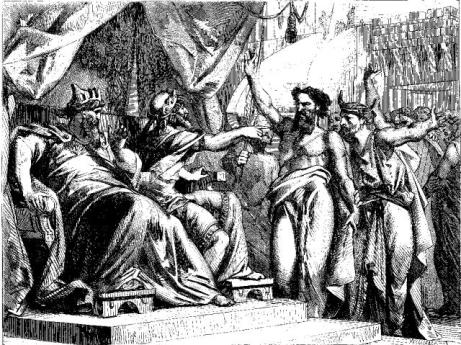
This truth is also illustrated in the Bible. We read in 1 Kings 22 about Ahab the king of Israel (the ten northern tribes) wanting to go to war with Aram while he was being visited by Jehoshaphat the king of Judah (the two southern tribes). It is important to remember that before this point Ahab had already been confronted by Elijah on several occasions and had not listened to God’s true prophet. So Ahab who refused to receive and believe the truth surrounded himself with “yes-men” – teachers in accordance to his own desires! Ahab asked Jehoshaphat to go to war with him – “And he said to Jehoshaphat, ‘Will you go with me to battle at Ramoth-gilead?’ And Jehoshaphat said to the king of Israel, ‘I am as you are, my people as your people, my horses as your horses’” (1 Kings 22:4).
However, Jehoshaphat wanted to enquire for the word of the LORD first – “Moreover, Jehoshaphat said to the king of Israel, ‘Please inquire first for the word of the LORD’” (1 Kings 22:5). Then Ahab brought out his “yes-men” – “Then the King of Israel gathered the prophets together, about four hundred men, and said to them, ‘Shall I go against Ramoth-gilead to battle or shall I refrain?’ And they said, ‘Go up, for the LORD will give it into the hand of the king’” (1 Kings 22:6).
“But Jehoshaphat said, ‘Is there not yet a prophet of the LORD here that we may inquire of him?’ The king of Israel said to Jehoshaphat, ‘There is yet one man by whom we may inquire of the LORD, but I hate him, because he does not prophesy good concerning me, but evil. He is Micaiah son of Imlah.’ But Jehoshaphat said, ‘Let not the king say so’ (1 Kings 22:7-8). Ahab hated God’s true prophet because he was not a “yes-man” with a positive only word from the Lord. Ahab considered truth as evil because it was not what he wanted to hear!
So while Ahab and Jehoshaphat sat on their thrones listening to all the prophets who were prophesying before them, Ahab sent an officer to bring Micaiah so that they could hear from him. And all of Ahab’s prophets were prophesying “good” saying, “Go up to Ramoth-gilead and prosper, for the LORD will give it into the hand of the king” (see 1 Kings 22:9-12).
“Then the messenger who went to summon Micaiah spoke to him saying, ‘Behold now, the words of the prophets are uniformly favorable to the king. Please let your be like the word of one of them, and speak favorably.’ But Micaiah said, ‘As the LORD lives, what the LORD says to me, that I shall speak’” (1 Kings 22:13-14). The pressure was on for Micaiah to be a “yes-man” speaking lies that comfort but kill and he refused.
“When he came to the king, the king said to him, ‘Micaiah, shall we go to Ramoth-gilead to battle or shall we refrain?’ And he answered him, ‘Go up and succeed, and the LORD will give it into the hand of the king’” (1 Kings 22:15). Micaiah was speaking with sarcasm knowing that the king wasn’t interested in truth to which the king replied, “How many times must I adjure you to speak to me nothing but the truth in the name of the LORD?” (1 Kings 22:16).
“So he said, ‘I saw all Israel scattered on the mountains, like sheep which have no shepherd. And the Lord said, “These have no master. Let each of them return to his house in peace’” (1 Kings 22:17). “Then the king of Israel said to Jehoshaphat, ‘Did I not tell you that he would not prophesy good concerning me, but evil?’” (1 Kings 22:18)
But wait! Micaiah wasn’t through – he went on to tell Ahab the whole purpose of God – “Micaiah said, ‘Therefore, hear the word of the LORD. I saw the Lord sitting on His throne, and all the host of heaven standing by Him on His right and on His left. The Lord said, “Who will entice Ahab to go up and fall at Ramoth-gilead?” And one said this while another said that. Then a spirit came forward and stood before the LORD and said, “I will entice him.” The Lord said to him, “How?” And he said, “I will go out and be a deceiving spirit in the mouth of all his prophets.” Then He said, “You are to entice him and also prevail. Go and do so.” Now therefore, behold, the LORD has put a deceiving spirit in the mouth of all these your prophets; and the LORD has proclaimed disaster against you’” (1 Kings 22:19-23).
Beware of heaping “yes-men” to yourselves who only speak “good” and tell you what you want to hear - for they come with all the deception of wickedness for those who perish, because they did not receive the love of the truth so as to be saved. For this reason God will send upon them a deluding influence so that they will believe what is false, in order that they all may be judged who did not believe the truth, but took pleasure in wickedness.
But what the false prophet doesn’t understand is that he is under the judgment of God and is being used by God for the judgment of those who reject His truth. This truth is made plain in the Bible: “For the mystery of lawlessness is already at work; only he who now restrains will do so until he is taken out of the way. Then that lawless one will be revealed whom the Lord will slay with the breath of His mouth and bring to an end by the appearance of His coming; that is, the one whose coming is in accord with the activity of Satan, with all power and signs and false wonders, and with all the deception of wickedness for those who perish, because they did not receive the love of the truth so as to be saved. For this reason God will send upon them a deluding influence so that they will believe what is false, in order that they all may be judged who did not believe the truth, but took pleasure in wickedness” (2 Thessalonians 2:7-12).
This truth is also illustrated in the Bible. We read in 1 Kings 22 about Ahab the king of Israel (the ten northern tribes) wanting to go to war with Aram while he was being visited by Jehoshaphat the king of Judah (the two southern tribes). It is important to remember that before this point Ahab had already been confronted by Elijah on several occasions and had not listened to God’s true prophet. So Ahab who refused to receive and believe the truth surrounded himself with “yes-men” – teachers in accordance to his own desires! Ahab asked Jehoshaphat to go to war with him – “And he said to Jehoshaphat, ‘Will you go with me to battle at Ramoth-gilead?’ And Jehoshaphat said to the king of Israel, ‘I am as you are, my people as your people, my horses as your horses’” (1 Kings 22:4).
However, Jehoshaphat wanted to enquire for the word of the LORD first – “Moreover, Jehoshaphat said to the king of Israel, ‘Please inquire first for the word of the LORD’” (1 Kings 22:5). Then Ahab brought out his “yes-men” – “Then the King of Israel gathered the prophets together, about four hundred men, and said to them, ‘Shall I go against Ramoth-gilead to battle or shall I refrain?’ And they said, ‘Go up, for the LORD will give it into the hand of the king’” (1 Kings 22:6).
“But Jehoshaphat said, ‘Is there not yet a prophet of the LORD here that we may inquire of him?’ The king of Israel said to Jehoshaphat, ‘There is yet one man by whom we may inquire of the LORD, but I hate him, because he does not prophesy good concerning me, but evil. He is Micaiah son of Imlah.’ But Jehoshaphat said, ‘Let not the king say so’ (1 Kings 22:7-8). Ahab hated God’s true prophet because he was not a “yes-man” with a positive only word from the Lord. Ahab considered truth as evil because it was not what he wanted to hear!
So while Ahab and Jehoshaphat sat on their thrones listening to all the prophets who were prophesying before them, Ahab sent an officer to bring Micaiah so that they could hear from him. And all of Ahab’s prophets were prophesying “good” saying, “Go up to Ramoth-gilead and prosper, for the LORD will give it into the hand of the king” (see 1 Kings 22:9-12).
“Then the messenger who went to summon Micaiah spoke to him saying, ‘Behold now, the words of the prophets are uniformly favorable to the king. Please let your be like the word of one of them, and speak favorably.’ But Micaiah said, ‘As the LORD lives, what the LORD says to me, that I shall speak’” (1 Kings 22:13-14). The pressure was on for Micaiah to be a “yes-man” speaking lies that comfort but kill and he refused.
“When he came to the king, the king said to him, ‘Micaiah, shall we go to Ramoth-gilead to battle or shall we refrain?’ And he answered him, ‘Go up and succeed, and the LORD will give it into the hand of the king’” (1 Kings 22:15). Micaiah was speaking with sarcasm knowing that the king wasn’t interested in truth to which the king replied, “How many times must I adjure you to speak to me nothing but the truth in the name of the LORD?” (1 Kings 22:16).
“So he said, ‘I saw all Israel scattered on the mountains, like sheep which have no shepherd. And the Lord said, “These have no master. Let each of them return to his house in peace’” (1 Kings 22:17). “Then the king of Israel said to Jehoshaphat, ‘Did I not tell you that he would not prophesy good concerning me, but evil?’” (1 Kings 22:18)
But wait! Micaiah wasn’t through – he went on to tell Ahab the whole purpose of God – “Micaiah said, ‘Therefore, hear the word of the LORD. I saw the Lord sitting on His throne, and all the host of heaven standing by Him on His right and on His left. The Lord said, “Who will entice Ahab to go up and fall at Ramoth-gilead?” And one said this while another said that. Then a spirit came forward and stood before the LORD and said, “I will entice him.” The Lord said to him, “How?” And he said, “I will go out and be a deceiving spirit in the mouth of all his prophets.” Then He said, “You are to entice him and also prevail. Go and do so.” Now therefore, behold, the LORD has put a deceiving spirit in the mouth of all these your prophets; and the LORD has proclaimed disaster against you’” (1 Kings 22:19-23).
Beware of heaping “yes-men” to yourselves who only speak “good” and tell you what you want to hear - for they come with all the deception of wickedness for those who perish, because they did not receive the love of the truth so as to be saved. For this reason God will send upon them a deluding influence so that they will believe what is false, in order that they all may be judged who did not believe the truth, but took pleasure in wickedness.
Subscribe to:
Posts (Atom)