God’s Word is truth and it must be because He is truth and He only speaks truth. Therefore what God has to say on any subject is true and we are not left to ourselves to determine what is and what is not true. Since it is the Word of God which is the standard of measure for determining truth we must go to it and hold every truth claim up against God’s Word to see whether or not it really is true. God’s Word is our only trustworthy standard of judgment. Not only does God’s Word tell us the truth of who God is but it also tells us the truth of who we are and whether or not we have become His children or are still His enemies. It is the Word of God alone that tells us who are the children of God and who are the children of the devil.
Since the Word of God is truth it gives an accurate portrait or portrayal of those whom it describes. Therefore God’s Word serves as a mirror or even x-ray which accurately reflects or reveals the inner character traits of each person. I like the way that Warren Wiersbe put it, “God’s Word doesn’t show me my baldness but my badness.” It is possible for men to appear on the outside to be all pious and pure but on the inside to be full of dead men’s bones. It is possible for men to appear on the outside to be all righteous but on the inside to be all rotten.
In Jude verse four, Jude introduces us to some very dangerous people who may appear to be all righteous on the outside but are completely rotten on the inside. In verse four Jude tells us that these dangerous apostates are insidious (stealthy, treacherous, or deceitful) in their activity – “For certain persons have crept in unnoticed, those who were long beforehand marked out for this condemnation, ungodly persons who turn the grace of our God into licentiousness and deny our only Master and Lord, Jesus Christ.”
In verses five through seven Jude gave three biblical and historical examples of the certainty of God’s judgment on apostates. In verses eight through nineteen Jude gave a portrait of apostates which accurately reflects and reveals their inner character traits. In these twelve verses (8-19) Jude referred to the apostates of verse four as “these men” or “these” six times.
Let us consider from the Word of God the portrait of “these people” and the reasons for their woe.
To begin with Jude says of these certain persons in verse four that they are insidious in their activity. They are stealthy, treacherous and deceitful. These people are a great danger to the church of God and His truth that they are to proclaim and uphold. They are workers of iniquity twisting the meaning of God’s Word and God’s grace. And now in verses 8-10 Jude begins to give the full portrait of these people who are insidious in their activity.
The first characteristic that Jude gives is that these people are insatiable in their ambition – “Yet in the same way, these men, also by dreaming…” (8a). These persons are not content with their lot; they are not satisfied with their positions until they achieve their dreams. They believe that they are the answer to the problems of God’s church and that if God would turn them loose they could show everyone how church is supposed to be done. These people live in a dream-world of unreality and delusion. They overestimate their own importance and are not satisfied when others don’t recognize their abilities and their supposed rights to be in some position of leadership.
Jude put it this way in verse 16 – “These are grumblers, finding fault, following after their own lusts….” “Grumblers” is “murmurers” and it is one who discontentedly complains against God. It refers, not to a loud, outspoken dissatisfaction, but an undertone muttering. “Finding fault” here means “blamers of their lot, complaining of one’s position, discontented with their position.” We will talk more about this when we get to the apostates’ engagement in the rebellion of Korah. “Following after their own lusts” shows us that these people are dreamers who do not abide in or by the Word of God. They have a vision for the church that includes them in positions of prominence but that vision is not based on God’s divine revelation as found in His Word. These people are insatiable in their ambition.
The second characteristic of these people is they are insanitary in their audacity – “Yet in the same way these men, also by dreaming, defile the flesh…” (8b). Insanitary means unclean or likely to cause disease. Audacity means boldness or daring, especially with confident or arrogant disregard for personal safety. These people have an unholy boldness. They have the nerve to disobey God’s divine revelation and act as though God doesn’t mind. They believe that their agenda is God’s agenda and that their happiness is God’s concern. They live to satisfy their lusts both for their positions of leadership and their personal happiness. Peter in 2 Peter 2:10 said that they are “daring, self-willed.” They have the boldness to turn God’s grace into licentiousness and say things that are an outright denial of the will, way, and Word of God. For instance, Ray Boltz, who divorced his wife a couple of years ago and is now an out of the closet homosexual said, “This is what it really comes down to, if this is the way God made me, then this is the way I’m going to live. It’s not like God made me this way and he’ll send me to hell if I am who he created me to be … I really feel closer to God because I no longer hate myself.” Isn’t that daring and self-willed and an outright denial of the will, way and Word of God? These people have an unholy boldness and are insanitary in their audacity.
The third characteristic of these people is that they are insubordinate to authority – “…and reject authority…” (8c). Doesn’t it make sense that if a person is insatiable in his ambition and insanitary in his audacity that he will be insubordinate to authority? The dissatisfied, scheming, daring, and self-willed person isn’t for a minute going to subject himself to the law of God. “For the mind set on the flesh is death, but the mind set on the Spirit is life and peace, because the mind set on the flesh is hostile towards God; for it does not subject itself to the law of God, for it is not even able to do so, and those who are in the flesh cannot please God” (Romans 8:6-8). Apostates recoil against the boundaries that would keep them in their God appointed place. These people don’t want to be under authority – they want to do things their way and not God’s way. When you see a person who despises and rejects authority, especially in the church, you are looking at an apostate. When someone is in a position of leadership in the church and will not be subject to God’s ordained and called leadership with his or her ministry, you can mark it down, he or she is rebellious and despises and rejects authority. If you have the attitude that I don’t need and don’t desire the oversight of the preacher and the church leaders in my ministry then you fit the portrait of “these people” who are apostates headed for destruction. Let me ask some questions: who structured the government and function of the church? Who designed the church to be led by scripturally qualified men? Who calls those men to that responsibility? The answer is the Lord! Now let me ask another question: if someone rejects and despises that leadership, who are they rejecting and despising? The answer is the Lord! These people are insubordinate to authority.
A fourth characteristic of these people is that they are insolent in their arrogance – “…and revile angelic majesties” (8d). Insolent means boldly rude or disrespectful. Again look at the logical sequence in their downhill plunge to destruction – the person who is insatiable in his ambition, insanitary in his audacity, and insubordinate to authority, will be insolent in his arrogance. Here the example of the archangel Michael disputing with the devil is given as to how those who belong to God are not insolent in arrogance (9). “But these men revile the things which they do not understand…” (10a). These men revile God’s ministers. This is what Korah and his bunch did to Moses in the book of Numbers. They rejected the authority that God gave Moses and accused him of taking that authority to himself and lording it over the people. Arrogant speech is a dangerous thing and so is despising that authority that God has established. Look out when you see someone who is arrogantly rebuking the devil or arrogantly disrespecting the authority that God has established. These people are insolent in their arrogance.
A fifth characteristic of these people is that they are instinctive in their actions – “…and the things which they know by instinct, like unreasoning animals…” (10b). These people are not motivated by the Word of God (inspiration) but by their instincts for accomplishing their agenda. These people operate by the flesh and not by faith. Their way seems right but it ends in death. Faith comes by hearing and hearing by the Word of God. They think that they are promoting themselves and that God is pleased with them forgetting that those who are in the flesh cannot please God. God is never pleased when people attempt to do His will their way. It is a dangerous thing to operate by instinct rather than inspiration. These people are instinctive in their actions.
A sixth and final characteristic of these people in these verses is that they are insensible to their apostasy – “…by these things they are destroyed” (10c). It should be obvious to anyone who is marked by the first five characteristics of these people that they are in grave danger and that they are apostates and children of the devil. But not these people – you can show this to them as clear as day from God’s Word and they will be insensible to their apostasy. They will not be able to feel or fear the danger that they are in. These people are insensible to their apostasy. And no wonder – look at verse four.
Showing posts with label false prophets. Show all posts
Showing posts with label false prophets. Show all posts
Monday, November 10, 2008


Monday, August 18, 2008
Testing the Spirits...1 John 4:1-6
“Beloved, do not believe every spirit, but test the spirits to whether they are from God, because many false prophets have gone out into the world. By this we know the Spirit of God: every spirit that confesses that Jesus Christ has come in the flesh is from God; and every spirit that does not confess Jesus is not from God; this is the spirit of the antichrist, of which you have heard that it is coming, and now is already in the world. You are from God, little children, and have overcome them; because greater is He who is in you than he who is in the world. They are from the world; therefore they speak as from the world, and the world listens to them. We are from God; he who knows God listens to us; he who is not from God does not listen to us. By this we know the spirit of truth and the spirit of error.”
Not only is testing the spirits to see whether they are from God commanded by the Lord in His word but is also commended by the Lord in His word – “I know your deeds and your toil and perseverance, and that you cannot tolerate evil men, and you put to the test those who call themselves apostles, and they are not, and you found them to be false” (Revelation 2:2).
1 John 4:1-6 is very pertinent and potent in testing the spirits to determine whether they are from God. However, if we don’t keep the whole paragraph in its immediate context along with the overall context of Scripture, we may fail to understand how these deceivers are to be spotted. At first glance this passage seems to be saying that anyone who professes that Jesus Christ has come in the flesh is from God. That is not what it is saying! Overall context of Scripture and the immediate context of this passage points out clearly that professing Jesus as coming in the flesh and as Lord isn’t the same as confessing that Jesus Christ has come in the flesh and is Lord.
The word “confess” is homologeo, from homos, “the same,” and lego, “to speak,” and therefore “confess” means to “speak the same thing as another.” This means that to confess Jesus Christ as coming in the flesh is to be actuated by the Holy Spirit of God and to say the exact same thing about the person and work of Christ that God Himself says. This is more than profession and head knowledge; this is confession and is heart knowledge. This confession of Jesus Christ coming in the flesh is to move into the realm of illumination concerning penal substitution and the exclusivity of salvation in Jesus Christ alone based on His sinless life, death for sinners, and resurrection from the dead for the purpose of the imputation of righteousness to the unrighteous whereby God can be both just and the justifier of those who have faith in Jesus Christ. This is clearly enunciated in Romans 10:9-10 – “that if you confess with your mouth Jesus as Lord, and believe in your heart that God raised Him from the dead, you will be saved; for with the heart a person believes, resulting in righteousness, and with the mouth he confesses, resulting in salvation.”
Jesus also addressed the issue of those who profess Him but do not really confess Him in Matthew 7:21-23 – “Not everyone who says to Me, ‘Lord, Lord,’ will enter the kingdom of heaven, but he who does the will of My Father who is in heaven will enter. Many will say to Me on that day, ‘Lord, Lord, did we not prophesy in Your name, and in Your name cast out demons, and in Your name perform many miracles?’ And then I will declare to them, ‘I never knew you; DEPART FROM ME, YOU WHO PRACTICE LAWLESSNESS.’”
Notice that these false prophets of whom Jesus was speaking professed Him as Lord but didn’t abide by the Word of God doing His Father’s will. Instead they practiced lawlessness; they were workers of iniquity – twisting the Scriptures to their own destruction. This brings us back to 1 John 4:1-6 where John went on to say that the many false prophets who have gone out into the world speak as from the world and the world listens to them. How do we know if someone is just professing Christ as Lord and is a false prophet or if he is confessing Christ as Lord and is a true prophet? The answer is in whether or not he twists the Scriptures and speaks as from the world in order to be heard by and listened to by the world or whether or not he is true to the Scriptures and speaks as from God with the world rejecting his message.
If what a man teaches violates Scripture then he is a false prophet regardless of his profession of Jesus because right belief (heart knowledge) determines right behavior! Workers of iniquity (Scripture twisters) may profess Jesus with their mouths but deny Him by their deeds (see Titus 1:16).
Not only is testing the spirits to see whether they are from God commanded by the Lord in His word but is also commended by the Lord in His word – “I know your deeds and your toil and perseverance, and that you cannot tolerate evil men, and you put to the test those who call themselves apostles, and they are not, and you found them to be false” (Revelation 2:2).
1 John 4:1-6 is very pertinent and potent in testing the spirits to determine whether they are from God. However, if we don’t keep the whole paragraph in its immediate context along with the overall context of Scripture, we may fail to understand how these deceivers are to be spotted. At first glance this passage seems to be saying that anyone who professes that Jesus Christ has come in the flesh is from God. That is not what it is saying! Overall context of Scripture and the immediate context of this passage points out clearly that professing Jesus as coming in the flesh and as Lord isn’t the same as confessing that Jesus Christ has come in the flesh and is Lord.
The word “confess” is homologeo, from homos, “the same,” and lego, “to speak,” and therefore “confess” means to “speak the same thing as another.” This means that to confess Jesus Christ as coming in the flesh is to be actuated by the Holy Spirit of God and to say the exact same thing about the person and work of Christ that God Himself says. This is more than profession and head knowledge; this is confession and is heart knowledge. This confession of Jesus Christ coming in the flesh is to move into the realm of illumination concerning penal substitution and the exclusivity of salvation in Jesus Christ alone based on His sinless life, death for sinners, and resurrection from the dead for the purpose of the imputation of righteousness to the unrighteous whereby God can be both just and the justifier of those who have faith in Jesus Christ. This is clearly enunciated in Romans 10:9-10 – “that if you confess with your mouth Jesus as Lord, and believe in your heart that God raised Him from the dead, you will be saved; for with the heart a person believes, resulting in righteousness, and with the mouth he confesses, resulting in salvation.”
Jesus also addressed the issue of those who profess Him but do not really confess Him in Matthew 7:21-23 – “Not everyone who says to Me, ‘Lord, Lord,’ will enter the kingdom of heaven, but he who does the will of My Father who is in heaven will enter. Many will say to Me on that day, ‘Lord, Lord, did we not prophesy in Your name, and in Your name cast out demons, and in Your name perform many miracles?’ And then I will declare to them, ‘I never knew you; DEPART FROM ME, YOU WHO PRACTICE LAWLESSNESS.’”
Notice that these false prophets of whom Jesus was speaking professed Him as Lord but didn’t abide by the Word of God doing His Father’s will. Instead they practiced lawlessness; they were workers of iniquity – twisting the Scriptures to their own destruction. This brings us back to 1 John 4:1-6 where John went on to say that the many false prophets who have gone out into the world speak as from the world and the world listens to them. How do we know if someone is just professing Christ as Lord and is a false prophet or if he is confessing Christ as Lord and is a true prophet? The answer is in whether or not he twists the Scriptures and speaks as from the world in order to be heard by and listened to by the world or whether or not he is true to the Scriptures and speaks as from God with the world rejecting his message.
If what a man teaches violates Scripture then he is a false prophet regardless of his profession of Jesus because right belief (heart knowledge) determines right behavior! Workers of iniquity (Scripture twisters) may profess Jesus with their mouths but deny Him by their deeds (see Titus 1:16).
See also How to Test the Spirits.
Thursday, June 12, 2008
When Men Will Not Receive The Truth...God Will Send A Deluding Influence!
True prophets are not “yes-men” speaking what people want to hear and tickling the ears of unrepentant truth rejecters. True prophets speak truth that hurts and then heals rather than lies that comfort and then kills. However, false prophets are more than happy to be “yes-men” speaking what people want to hear and tickling the ears of unrepentant truth rejecters.
But what the false prophet doesn’t understand is that he is under the judgment of God and is being used by God for the judgment of those who reject His truth. This truth is made plain in the Bible: “For the mystery of lawlessness is already at work; only he who now restrains will do so until he is taken out of the way. Then that lawless one will be revealed whom the Lord will slay with the breath of His mouth and bring to an end by the appearance of His coming; that is, the one whose coming is in accord with the activity of Satan, with all power and signs and false wonders, and with all the deception of wickedness for those who perish, because they did not receive the love of the truth so as to be saved. For this reason God will send upon them a deluding influence so that they will believe what is false, in order that they all may be judged who did not believe the truth, but took pleasure in wickedness” (2 Thessalonians 2:7-12).
This truth is also illustrated in the Bible. We read in 1 Kings 22 about Ahab the king of Israel (the ten northern tribes) wanting to go to war with Aram while he was being visited by Jehoshaphat the king of Judah (the two southern tribes). It is important to remember that before this point Ahab had already been confronted by Elijah on several occasions and had not listened to God’s true prophet. So Ahab who refused to receive and believe the truth surrounded himself with “yes-men” – teachers in accordance to his own desires! Ahab asked Jehoshaphat to go to war with him – “And he said to Jehoshaphat, ‘Will you go with me to battle at Ramoth-gilead?’ And Jehoshaphat said to the king of Israel, ‘I am as you are, my people as your people, my horses as your horses’” (1 Kings 22:4).
However, Jehoshaphat wanted to enquire for the word of the LORD first – “Moreover, Jehoshaphat said to the king of Israel, ‘Please inquire first for the word of the LORD’” (1 Kings 22:5). Then Ahab brought out his “yes-men” – “Then the King of Israel gathered the prophets together, about four hundred men, and said to them, ‘Shall I go against Ramoth-gilead to battle or shall I refrain?’ And they said, ‘Go up, for the LORD will give it into the hand of the king’” (1 Kings 22:6).
“But Jehoshaphat said, ‘Is there not yet a prophet of the LORD here that we may inquire of him?’ The king of Israel said to Jehoshaphat, ‘There is yet one man by whom we may inquire of the LORD, but I hate him, because he does not prophesy good concerning me, but evil. He is Micaiah son of Imlah.’ But Jehoshaphat said, ‘Let not the king say so’ (1 Kings 22:7-8). Ahab hated God’s true prophet because he was not a “yes-man” with a positive only word from the Lord. Ahab considered truth as evil because it was not what he wanted to hear!
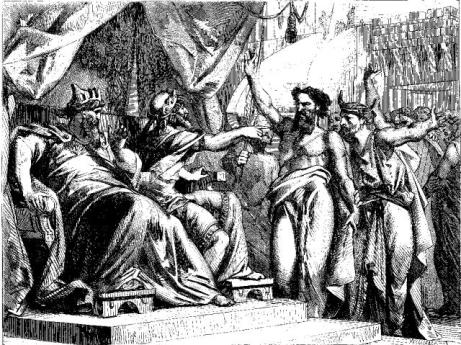
So while Ahab and Jehoshaphat sat on their thrones listening to all the prophets who were prophesying before them, Ahab sent an officer to bring Micaiah so that they could hear from him. And all of Ahab’s prophets were prophesying “good” saying, “Go up to Ramoth-gilead and prosper, for the LORD will give it into the hand of the king” (see 1 Kings 22:9-12).
“Then the messenger who went to summon Micaiah spoke to him saying, ‘Behold now, the words of the prophets are uniformly favorable to the king. Please let your be like the word of one of them, and speak favorably.’ But Micaiah said, ‘As the LORD lives, what the LORD says to me, that I shall speak’” (1 Kings 22:13-14). The pressure was on for Micaiah to be a “yes-man” speaking lies that comfort but kill and he refused.
“When he came to the king, the king said to him, ‘Micaiah, shall we go to Ramoth-gilead to battle or shall we refrain?’ And he answered him, ‘Go up and succeed, and the LORD will give it into the hand of the king’” (1 Kings 22:15). Micaiah was speaking with sarcasm knowing that the king wasn’t interested in truth to which the king replied, “How many times must I adjure you to speak to me nothing but the truth in the name of the LORD?” (1 Kings 22:16).
“So he said, ‘I saw all Israel scattered on the mountains, like sheep which have no shepherd. And the Lord said, “These have no master. Let each of them return to his house in peace’” (1 Kings 22:17). “Then the king of Israel said to Jehoshaphat, ‘Did I not tell you that he would not prophesy good concerning me, but evil?’” (1 Kings 22:18)
But wait! Micaiah wasn’t through – he went on to tell Ahab the whole purpose of God – “Micaiah said, ‘Therefore, hear the word of the LORD. I saw the Lord sitting on His throne, and all the host of heaven standing by Him on His right and on His left. The Lord said, “Who will entice Ahab to go up and fall at Ramoth-gilead?” And one said this while another said that. Then a spirit came forward and stood before the LORD and said, “I will entice him.” The Lord said to him, “How?” And he said, “I will go out and be a deceiving spirit in the mouth of all his prophets.” Then He said, “You are to entice him and also prevail. Go and do so.” Now therefore, behold, the LORD has put a deceiving spirit in the mouth of all these your prophets; and the LORD has proclaimed disaster against you’” (1 Kings 22:19-23).
Beware of heaping “yes-men” to yourselves who only speak “good” and tell you what you want to hear - for they come with all the deception of wickedness for those who perish, because they did not receive the love of the truth so as to be saved. For this reason God will send upon them a deluding influence so that they will believe what is false, in order that they all may be judged who did not believe the truth, but took pleasure in wickedness.
But what the false prophet doesn’t understand is that he is under the judgment of God and is being used by God for the judgment of those who reject His truth. This truth is made plain in the Bible: “For the mystery of lawlessness is already at work; only he who now restrains will do so until he is taken out of the way. Then that lawless one will be revealed whom the Lord will slay with the breath of His mouth and bring to an end by the appearance of His coming; that is, the one whose coming is in accord with the activity of Satan, with all power and signs and false wonders, and with all the deception of wickedness for those who perish, because they did not receive the love of the truth so as to be saved. For this reason God will send upon them a deluding influence so that they will believe what is false, in order that they all may be judged who did not believe the truth, but took pleasure in wickedness” (2 Thessalonians 2:7-12).
This truth is also illustrated in the Bible. We read in 1 Kings 22 about Ahab the king of Israel (the ten northern tribes) wanting to go to war with Aram while he was being visited by Jehoshaphat the king of Judah (the two southern tribes). It is important to remember that before this point Ahab had already been confronted by Elijah on several occasions and had not listened to God’s true prophet. So Ahab who refused to receive and believe the truth surrounded himself with “yes-men” – teachers in accordance to his own desires! Ahab asked Jehoshaphat to go to war with him – “And he said to Jehoshaphat, ‘Will you go with me to battle at Ramoth-gilead?’ And Jehoshaphat said to the king of Israel, ‘I am as you are, my people as your people, my horses as your horses’” (1 Kings 22:4).
However, Jehoshaphat wanted to enquire for the word of the LORD first – “Moreover, Jehoshaphat said to the king of Israel, ‘Please inquire first for the word of the LORD’” (1 Kings 22:5). Then Ahab brought out his “yes-men” – “Then the King of Israel gathered the prophets together, about four hundred men, and said to them, ‘Shall I go against Ramoth-gilead to battle or shall I refrain?’ And they said, ‘Go up, for the LORD will give it into the hand of the king’” (1 Kings 22:6).
“But Jehoshaphat said, ‘Is there not yet a prophet of the LORD here that we may inquire of him?’ The king of Israel said to Jehoshaphat, ‘There is yet one man by whom we may inquire of the LORD, but I hate him, because he does not prophesy good concerning me, but evil. He is Micaiah son of Imlah.’ But Jehoshaphat said, ‘Let not the king say so’ (1 Kings 22:7-8). Ahab hated God’s true prophet because he was not a “yes-man” with a positive only word from the Lord. Ahab considered truth as evil because it was not what he wanted to hear!
So while Ahab and Jehoshaphat sat on their thrones listening to all the prophets who were prophesying before them, Ahab sent an officer to bring Micaiah so that they could hear from him. And all of Ahab’s prophets were prophesying “good” saying, “Go up to Ramoth-gilead and prosper, for the LORD will give it into the hand of the king” (see 1 Kings 22:9-12).
“Then the messenger who went to summon Micaiah spoke to him saying, ‘Behold now, the words of the prophets are uniformly favorable to the king. Please let your be like the word of one of them, and speak favorably.’ But Micaiah said, ‘As the LORD lives, what the LORD says to me, that I shall speak’” (1 Kings 22:13-14). The pressure was on for Micaiah to be a “yes-man” speaking lies that comfort but kill and he refused.
“When he came to the king, the king said to him, ‘Micaiah, shall we go to Ramoth-gilead to battle or shall we refrain?’ And he answered him, ‘Go up and succeed, and the LORD will give it into the hand of the king’” (1 Kings 22:15). Micaiah was speaking with sarcasm knowing that the king wasn’t interested in truth to which the king replied, “How many times must I adjure you to speak to me nothing but the truth in the name of the LORD?” (1 Kings 22:16).
“So he said, ‘I saw all Israel scattered on the mountains, like sheep which have no shepherd. And the Lord said, “These have no master. Let each of them return to his house in peace’” (1 Kings 22:17). “Then the king of Israel said to Jehoshaphat, ‘Did I not tell you that he would not prophesy good concerning me, but evil?’” (1 Kings 22:18)
But wait! Micaiah wasn’t through – he went on to tell Ahab the whole purpose of God – “Micaiah said, ‘Therefore, hear the word of the LORD. I saw the Lord sitting on His throne, and all the host of heaven standing by Him on His right and on His left. The Lord said, “Who will entice Ahab to go up and fall at Ramoth-gilead?” And one said this while another said that. Then a spirit came forward and stood before the LORD and said, “I will entice him.” The Lord said to him, “How?” And he said, “I will go out and be a deceiving spirit in the mouth of all his prophets.” Then He said, “You are to entice him and also prevail. Go and do so.” Now therefore, behold, the LORD has put a deceiving spirit in the mouth of all these your prophets; and the LORD has proclaimed disaster against you’” (1 Kings 22:19-23).
Beware of heaping “yes-men” to yourselves who only speak “good” and tell you what you want to hear - for they come with all the deception of wickedness for those who perish, because they did not receive the love of the truth so as to be saved. For this reason God will send upon them a deluding influence so that they will believe what is false, in order that they all may be judged who did not believe the truth, but took pleasure in wickedness.
Wednesday, June 11, 2008
God's Provision for my Dilemma...prayer and Bible study are necessary for discernment regarding false teachers!
 Matthew 5 is about true righteousness. Matthew 6 is about true worship. Matthew 7 is about true judgment. But what seems so strange is why did our Lord say these words about prayer at this particular point (Matthew 7:7-11)? Why do these words come at this particular place in the Sermon on the Mount? What does prayer have to do with true judgment?
All of these are good questions to which we must find the right answers to be sure that we have the right interpretation of this passage. We must avoid the terrible danger of twisting the Scriptures to our own destruction. The only way to guard against the danger of twisting the Scriptures is to keep them in their context.
There is a theme running right through the chapter and it is the theme of judgment. Therefore this section will also deal with judgment just like the rest of the chapter. But what doesn’t seem to be clear at first becomes clearer and clearer the more we look into the Scriptures seeking their true meaning. The Lord has already given us two opposite statements in Matthew 7:1-6 to which we must be obedient to if we are to live an effective Christian life. He said, “Do not judge lest you be judged” (Matthew 7:1) and “Do not give what is holy to dogs...” (Matthew 7:6). And then again, "Beware of the false prophets who come to you in sheep's clothing, but inwardly are ravenous wolves" (Matthew 7:15).
On the one hand we are not to judge and on the other hand we are to judge. On the one hand we are not to have a critical, condemning, contemptuous spirit and on the other hand we are to have a discriminating, detecting, and discerning spirit. I don’t know about you but I know that I am not adequate or sufficient for these things. How can I possibly know who is true and who is false? How can I know if I am being judgmental or if I am being discerning? I need help and grace! I need knowledge and wisdom that I do not have. Where can I get it?
Here is the answer: “Ask, and it shall be given to you; seek, and you shall find; knock, and it shall be opened to you” (Matthew 7:7). It is here that I find God’s provision for my dilemma.
In these verses, Matthew 7:7-11, the Lord was speaking of prayer and Bible-study and persistence in it as God's provision for making a righteous judgment. He has not left us as orphans and we can know who is and who isn't a false prophet or false teacher. Matthew 7:7 is Proverbs 2:1-22 condensed or concentrated into a powerful and succinct statement regarding how to have discernment and discretion.
In Proverbs 2:1-22 the principles of asking, seeking, and knocking in order to have discernment are elucidated. First and foremost the principles of asking and seeking - prayer and Bible-study - are set forth:
"My son, if you will receive my words and treasure my commandments within you, make your ear attentive to wisdom, incline your heart to understanding" - there must be a reception and love for the Word of God (Proverbs 2:1-2).
Prayer - "Ask, and it shall be given to you" (Matthew 7:7a) - "For if you cry for discernment, lift your voice for understanding" (Proverbs 2:3).
Bible-study - "Seek, and you shall find" (Matthew 7:7b) - "If you seek her as silver and search for her as for hidden treasures; then you will discern the fear of the Lord and discover the knowledge of God. For the Lord gives wisdom; from His mouth come knowledge and understanding. He stores up sound wisdom for the upright; He is a shield to those who walk in integrity, guarding the paths of justice, and he preserves the way of His godly ones. Then you will discern righteousness and justice and equity and every good course" (Proverbs 2:4-9).
Then the principle of persistence is set forth:
Persistence - "Knock, and it shall be opened to you (Matthew 7:7c) - "For wisdom will enter your heart and knowledge will be pleasant to your soul" (Proverbs 2:10).
Then: "Discernment will guard you, understanding will watch over you, to deliver you from the way of evil, from the man who speaks perverse things; from those who leave the paths of uprightness to walk in the ways of darkness; who delight in doing evil and rejoice in the perversity of evil; whose paths are crooked, and who are devious in their ways" (Proverbs 2:11-15).
Proverbs 2:16-22 deals with the strange woman, the adulteress who flatters with her words - false and apostate religion - and how you will be delivered from her!
Wednesday, May 28, 2008
An Examination of the Teachings of Rick Warren

The entire article can be found online here.
Despite the rapid growth of Saddleback, Warren writes in The Purpose-Driven Church (Zondervan) that "the key issue for churches in the twenty-first century is church health, not church growth."
Amen! 100% true! The key issue is church health and not church growth.
Why do you say health should replace growth as the focal point for pastors?Rick Warren: Because size is not the issue. You can be big and healthy, or big and flabby. You can be small and healthy, or small and wimpy. Big isn't better; small isn't better. Healthy is better. There is no correlation between the size and strength of a church. I'm interested in helping churches become balanced and healthy. If they are healthy, growth will naturally happen.
Amen again!
If numerical growth is an unreliable indicator of health, how can you tell if your church is healthy?It's not unreliable, just inadequate. There are five ways to measure growth. A church needs to grow warmer through fellowship, deeper through discipleship, stronger through worship, broader through ministry, and larger through evangelism.
Agreed! These are the natural God-given desires to those supernaturally regenerated and should mark any healthy Christian or church.
Another mark of maturity is the ability to start having babies. I want to see churches that are plateaued in numerical growth begin to reproduce through church planting.
Well, having babies can be a mark of maturity but it surely doesn’t have to. Not only that having babies or the ability to reproduce is not a reliable indicator of health. Unhealthy organisms can and do reproduce. Can a woman with AIDS reproduce? Yes! What will be the outcome? A baby with AIDS? Can cancer cells reproduce? Is malignant growth to be considered an indicator of health? Are the cults healthy because they can reproduce?
A body is not healthy because it can reproduce (that’s back to the old church growth issue just in another form), it is healthy because its immune system maintains the purity of the body. Cancer kills because the immune system to a large degree considers the cancer cells part of the body and will not remove those cells for that reason. And cancer cells are more prolific at reproduction than healthy, normal cells.
How do you cultivate health in a church?Health is the result of balance. Balance occurs when you have a strategy and a structure to fulfill every one of what I believe are the five New Testament purposes for the church—worship, evangelism, fellowship, discipleship, and ministry. If you don't have a strategy and a structure that intentionally balances the purposes of the church, the church tends to overemphasize the purpose the pastor feels most passionate about.
In evangelicalism, we tend to go to seed on one truth at a time. You attend one seminar and hear, "The key is seeker services." You go to another: "The key is small groups." "The key is discipleship." "Expository preaching." The fact is, they're all important.
When a church emphasizes any one purpose to the neglect of others, that produces imbalance—unhealth. That causes a lot of churches to remain stunted.
Health does need balance – like a balanced diet – but that is no guarantee of health. People can eat a well balanced diet and still become unhealthy through other impure influences or activities. Health is a result of purity and is maintained by incorporating those influences or activities that promote the purity of the body. The body must incorporate the pure and good and remove the impure and bad. That’s both biblical and logical!
How do you keep things balanced?Four things must happen. You've got to move people into membership, build them up to maturity, train them for ministry, and send them out on their mission. We use a little baseball diamond to illustrate that.
We've got a scorecard to evaluate progress. Just like when you go to a doctor and he checks all kinds of vital signs, the health of a church is quantifiable. For example, I can measure how many more people are involved in ministry this month than last month. How you accomplish those four objectives doesn't matter.
Wait a minute! “You’ve got to move people into membership”? Maybe just semantics but what is really meant here? If by moving people into membership he means going out and proclaiming the gospel, bringing people to saving faith through the regenerating power of the Holy Spirit and then they become members then fine. However, if by moving people into membership he means having man-centered services and offering the unregenerate the opportunity to “serve Christ” and seeing their willingness to join the church as proof or evidence of regeneration then we have a real and undeniable problem. Men aren’t saved by offering them a Purpose Driven Church or a Purpose Driven Life but only by the power of the Gospel. Getting unregenerate men involved in religious activity only produces counterfeit Christians who have a form of godliness but have denied its power.
How you accomplish those four objectives doesn't matter.
Not so fast! That is both unbiblical and illogical! This is the old lie that “methods don’t matter” as long as they produce the desired results.
Biblically the truth that methods do matter is seen not only in the Ten Commandments but is also illustrated all through the pages of the Bible and especially in the life of the Lord Jesus during His temptations in the wilderness. If methods don’t matter then Jesus could have turned the stones into bread and it would not have mattered. If methods don’t matter then Jesus could have jumped from the pinnacle of the temple and it would not have mattered. If methods don’t matter then Jesus could have bowed down to Satan to receive the kingdoms of the world and it would not have mattered.
Logically we can deduce that just because a method gets "results" does not make it a good method. Raping a woman to satisfy sexual desires may get results but it is an unworthy method. Stealing to obtain may get results but it is an unworthy method. Using an unworthy method to accomplish what may be a worthy goal spoils the goal before you ever get to it.
In today's society, how do you stay healthy when you bring in a lot of unhealthy people?Health doesn't mean perfection. My kids are healthy, not perfect. There will never be a perfect church this side of heaven, because every church is filled with pagans, carnal Christians, and immature believers.
I agree that health doesn’t mean perfection and that there are no perfect churches this side of heaven, but I don’t agree with this ecclesiology, this definition of church as mentioned above – the church is the ecclesia the called out ones and is to be made up of regenerate people, a chosen race, a royal priesthood, a holy nation, a people for God’s own possession, so that we may proclaim the excellencies of Him who has called you out of darkness into His marvelous light; for you once were not a people, but now you are the people of God; you had not received mercy, but now you have received mercy (1 Peter 2:9-10).
To attempt to fill the church with pagans in order to “move them into membership” is unbiblical, unwise, and the philosophy of men like Robert Schuller who teach that the church should be “man-centered and not God-centered” in order to “impress the unchurched with the human needs approach” (see Robert Schuller’s Self-Esteem, The New Reformation, pgs. 12-13).
I've read books that emphasize, "You've got to reinforce the purity of the church." But Jesus said, "Let the tares and the wheat grow together, and one day I'll sort them out." We're not in the sorting business. We're in the harvesting business.
Wait a minute! I thought we were talking about health doesn’t mean perfection and now we are evidently talking about health doesn’t mean purity.
Biblically the church is to maintain purity! The Lord gave instructions on church discipline in order to maintain its purity. Not only that, we are told that Jesus died in order to purify His bride, the church (see Ephesians 5:25-27 and Titus 2:11-14).
Also, in the parable of the tares we are told that the “field” is the world – not the church – “and the field is the world” (Matthew 13:38). Furthermore, we are in the sorting business and not just the harvesting business – the quality of each man’s work is going to be tested to see “of what sort it is” (1 Corinthians 3:13).
Logically, what farmer is in just the harvesting business without also being in the sorting business? Shall he harvest a field full of weeds and take that to the market and expect to be rewarded?
We do get a lot of unhealthy people at church, because society is getting sicker. But Jesus demonstrated that ministering to hurting people was more important than maintaining purity. When you fish with a big net, you catch all kinds of fish.
Did Jesus ever compromise His purity in ministering to hurting people? Was that ever demonstrated in His life? No! Jesus died for my purity and yours – He demonstrated that nothing is more important than purity (Titus 2:11-14)! Why? God is Holy! He is pure! And without holiness no man shall see the Lord (Hebrews 12:14). That's a denial of the Master!
When you fish with a big net, you catch all kinds of fish.
And when you open a wide-gate you lead many to destruction!
Rick Warren uses the bait and switch tactic in his reasoning. He baits his listener up with something true and then systematically and secretly redefines its meaning in order to slip in his destructive heresies. In this interview he went from church health being the issue back to church growth in a subtle and almost undetectable manner by defining health as the ability to reproduce. Warren baited the definition of health as not meaning perfection and then switched to the definition of health not meaning purity. Warren not only violates the principles of sound logic – he also violates the principles of sound doctrine.
“But false prophets also arose among the people, just as there will be false teachers among you, who will secretly introduce destructive heresies, even denying the Master who bought them, bringing swift destruction upon themselves. Many will follow their sensuality, and because of them the way of the truth will be maligned; and in their greed they will exploit you with false words” (2 Peter 2:1-3).
Tuesday, May 27, 2008
PRAGMATISM...one of the devil's most insidious and successful methods to deceive

Pragmatism - if it works it must be right - judging by appearance, has always been a deadly and deceptive method employed by the devil. By it, both ministers and ministries are judged either true or false based solely on quantifiable, observable results. After all, we are told that the numbers don't lie! Really? How about the twelve spies sent to spy out the Promised Land and they came back to Moses with their report - ten said that its conquest could not be done and two said that it could. Two were right and ten were wrong! How about Elijah God's prophet and the three hundred and fifty prophets of Baal - one true and three hundred and fifty false! Or how about Jeremiah the prophet who ministered for forty years with no quantifiable, observable results - and yet he was vindicated by God and history!
Jesus said, "Do not judge according to appearance, but judge with righteous judgment" (John 7:24). Many are falling prey to the grave error of judging by appearance and therefore many are being deceived by ministers and ministries that appear to be right but are actually wrong.
What would you say of this pastor?
He knows how to inspire hope.
Jesus said, "Do not judge according to appearance, but judge with righteous judgment" (John 7:24). Many are falling prey to the grave error of judging by appearance and therefore many are being deceived by ministers and ministries that appear to be right but are actually wrong.
What would you say of this pastor?
He knows how to inspire hope.
He is committed to people in need.
He counsels prisoners and juvenile delinquents.
He starts job placement centers.
He opens rest homes and homes for the retarded.
He has a health clinic.
He organizes vocational training centers.
He provides free legal aid.
He opens community centers.
He preaches about God.
He creates warm Christian community.
His membership quickly exceeded 1000.
Do you like him? Do you think he is the man for the job? Would your church call him to be your next pastor? I hope not! He's the man in the picture and that was Jim Jones who was the pastor of the People’s Temple Christian Church. Jim Jones and almost a thousand of his most loyal followers committed suicide in the jungles of South America.
Do you like him? Do you think he is the man for the job? Would your church call him to be your next pastor? I hope not! He's the man in the picture and that was Jim Jones who was the pastor of the People’s Temple Christian Church. Jim Jones and almost a thousand of his most loyal followers committed suicide in the jungles of South America.
Nothing has changed! Men today are still being deceived by judging by appearance.
Wednesday, May 21, 2008
Why Some Preachers' Kids Are Emergent!



What does Rick Warren, Joel Osteen, and Andy Stanley have in common? Is it that they dress the same? No! Is it that they all use their hands while preaching? Well, maybe - but that still is not the commonality that I am looking for. Is it that they are all well known leaders in apostate seeker-sensitive, self-esteem, emergent church philosophy? Yes, but here's the real commonality between these three men - they are all preachers' kids!
Why or how is it that preachers' kids can turn out to be undiscerning, pragmatic, utilitarian, Pelagian or semi-Pelagian, ecumenical, postmodern apostates held captive by philosophy?
First and foremost there has been a wide-scale abandonment by preachers to be faithful to the God-called assignment of equipping the saints for the work of service through faithful, careful, diligent study, and systematic exposition of the Word of God which results in the saints "no longer [being] children, tossed here and there by waves and carried about by every wind of doctrine, by the trickery of men, by craftiness in deceitful scheming" (Ephesians 4:14).
Second there has been a wide-scale adoption by preachers to judge by appearance, seek the glory and honor of man, attempt to be popular, remove the offense of the cross, grow large crowds rather than loyal Christians, and pursue quantity rather than quality by using pragmatic methods based on philosophical religious humanism.
Finally, although more could be said, there has been a wide-scale acceptance of secretly introduced destructive heresies to the neglect of sound doctrine for the purpose of an ecumenical, liberal, social agenda to bring about world peace and prosperity.
At the root of the problem is a man-centered philosophy of soteriology rather than a God-centered theology of soteriology which naturally leads to a man-centered philosophy of ecclesiology and a man-centered philosophy of eschatology.
Do not be taken captive by philosophy!
Wednesday, April 30, 2008
The False Prophet's Method
 Since it is true that the false prophet’s motive is quantity and not quality (their motto is: “you have to get them there however you can”), then it is also true that his message will be one of easy salvation and easy discipleship – he will preach a message of a wide gate and broad way false gospel. But what also is logically true of the false prophet, are his methods. Since the false prophet is after quantity and not quality, his methods are out of line with God’s word.
In Matthew 7:24-27, Jesus tells us the differences between the false prophet’s methods and the true prophet’s methods by comparing a wise man (true prophet or true Christian) to a foolish man (false prophet or false Christian). The wise man hears the words of Jesus and acts on them while the foolish man hears the words of Jesus and does not act on them. The meaning and understanding of the passage is simple – the true prophet follows instructions and the false prophet ignores instructions. The true prophet trusts in the Lord with all his heart and does not lean on his own understanding while the false prophet trusts in himself with all his heart and leans on his own understanding. The true prophet goes by the Book while the false prophet does it his way. The true prophet says that you are to do nothing on your own initiative, but you are to look to see where God is at work and join Him there in His strategy for His purpose while the false prophet says that you are to discover the purpose of God and then you strategize how to fulfill it. The true prophet teaches you how to walk in faith – trusting the Lord with all your heart. The false prophet teaches you how to walk in the flesh – leaning on your own understanding.
So the first and most obvious method of the false prophet is he does not follow instructions – he does it his way leaning on his own understanding. He attempts to do the will of God his own way not following the Lord’s instructions. He uses his own ingenious ideas and thinks that the Lord is going to be pleased with his ingenuity. He has no time for instructions – he can figure this thing out. He is interested in quantity and not quality so the instructions only serve to hinder his efforts.
Another comparison between the methods of the true and false prophets is the true prophet isn’t in a hurry and doesn’t take short cuts while the false prophet is in a hurry and does take short cuts. The false prophet does not take the time to dig deep and lay a solid foundation taking whatever time is necessary to get the job done right. The false prophet isn’t interested in quality – he just wants quantity. The false prophet does not take the time to find out all he can from the Word of God and from history – his is a shallow foundation on sand. He is in a hurry and takes shortcuts in order to get “results.” For the false prophet, “if it works it must be right” so any method that seems to work he will use – even if it reeks of the flesh and the world. The false prophet thinks that God will allow any method as long as it works – but he has forgotten to check the instruction manual to see that that isn’t so.
The false prophet ends up deceiving himself and others because of his results. Men are prone to judging by appearance instead of making a righteous judgment and because the false prophet has “results” (quantity) he appears to be the true man of God when in reality he is a wolf in sheep’s clothing.
The true prophet is not in a hurry and takes the time to build on a solid foundation regardless if the false prophet appears to be a better and faster builder. The true prophet knows that the storm of the trying fire of God’s judgment is coming!
One last comparison between the methods of the true prophet and the false prophet leads us to the true prophet’s method of completing his assignment from the Lord while the false prophet’s method is of competing to see who can build the biggest, the fastest, and the most.
The true prophet doesn’t care what men think about his progress, he is only concerned with what God thinks and is interested in bringing glory to God by building God’s way. The false prophet does care about what men think about his progress, and believes that if men are pleased then surely God will be pleased also. But the sad reality is, the false prophet, is seeking his own glory, and not the glory of God. If he were seeking the glory of God, he would follow God’s instructions and take the time necessary to lay a proper foundation so that God would have the quality He is after and then God would receive the glory for His wisdom in the correct way to build. But the false prophet is too busy competing and never ends up completing God’s assignment because he believes that God is interested in quantity and not quality.
All through this passage of Scripture the truth jumps off the pages that God is interested in quality and not quantity. That is why the true man of God uses the narrow gate and the narrow way and the true man of God listens to and follows instructions, is not in a hurry, and is seeking after God’s glory and not his own.
Jesus' litmus test to determine a false prophet is this – is he interested in quantity or quality. If he is interested in quantity then he is a false prophet. If he is interested in quality then he is a true prophet.
The False Prophet's Motive
 The false prophet’s message as found in Matthew 7:13-14 is one of easy salvation and easy discipleship. He uses a wide gate and a broad way that leads to destruction. It is from the false prophet’s message that you can begin to understand the false prophet’s motive. The false prophet uses the wide gate and the broad way because his motive is quantity and not quality. The false prophet wrongly assumes that God is more interested in quantity than He is in quality and therefore he brings many people through the wide gate false gospel.
Jesus is saying in Matthew 7:15-20 that the false prophet’s motive is quantity. Jesus said, “Beware of the false prophets, who come to you in sheep’s clothing, but inwardly are ravenous wolves. You will know them by their fruits. Grapes are not gathered from thorn bushes nor figs from thistles, are they? So every good tree bears good fruit, but the bad tree bears bad fruit. A good tree cannot produce bad fruit, nor can a bad tree produce good fruit. Every tree that does not bear good fruit is cut down and thrown into the fire. So then, you will know them by their fruits.”
Notice that our Lord Jesus Christ said that the false prophet has no quality of fruit – He did not say that the false prophet didn’t have quantity. Jesus made a “qualitative” statement when He called the fruit either “good” or “bad”. The Lord is interested in quality and not quantity but the false prophet is interested in quantity and not quality.
Jesus said the way to know a false prophet is by his fruit – if you want to know whether or not a man is a false prophet who is a wolf in sheep’s clothing, look at his fruit; look at his church members.
The false prophet proclaims a wide gate false gospel and a broad way false discipleship that perpetuates false Christianity, producing church members who are powerless professors of the faith, holding to a form of godliness (Christianity), although they have denied its power (2 Timothy 3:1-5).
The false prophet may have quantity but he will not have quality. Jesus didn’t say that he wouldn’t have fruit, but that he would have “bad” fruit. The way to find out what kind of fruit a man is producing is to ask, “Are his church members more interested in pleasure than they are in purity?” – “They will be lovers of pleasure rather than lovers of God.” Are His church members more interested in the lottery than they are the Lord? – “They will be lovers of money” Are his church members more interested in their comfort than they are their character? – “They will be lovers of self.” Do his church members know that God’s top priority for the Christian’s life is his or her purity? “For this is the will of God, your sanctification” (1 Thessalonians 4:3). Do his church members know that God’s top priority for His church is its purity? “Husbands, love your wives, just as Christ also loved the church and gave Himself up for her, so that He might sanctify her, having cleansed her by the washing of water with the word, that He might present to Himself the church in all her glory, having no spot or wrinkle or any such thing; but that she would be holy and blameless” (Ephesians 5:25-27). Do his church members know that Christ died for purity (quality)? – “Looking for the blessed hope and the appearing of the glory of our great God and Savior, Christ Jesus, who gave Himself for us to redeem us from every lawless deed, and to purify for Himself a people zealous for good deeds” (Titus 2:13-14).
The false prophet’s motive is quantity and not quality – but God desires quality and it can only be obtained through the narrow gate and narrow way which produces the quality God wants.
Subscribe to:
Posts (Atom)