Just before the end of 2008, the Pew Forum on Religion & Public Life released a report indicating that a significant percentage of American evangelicals reject the biblical claim that Jesus is the only way of salvation. According to the report, 52% of American Christians believe that "at least some non-Christian faiths can lead to eternal life."
Surprisingly, 37% of those specifically identified as evangelical Christians agreed, rejecting the claim that Jesus is the only Savior and identifying at least some non-Christian religion or religions as leading to eternal life (source).And no wonder, when popular, powerful, and highly influential so-called evangelical leaders distort and doubt the truth of God's Word themselves, will not those who trust them and believe them believe the same errors that they preach?
When Billy Graham denies that Jesus Christ is the only way or Rick Warren claims that religious pluralism is the answer to the world's problems, will not many begin to believe the lie of the devil and doubt the Word of God? "Indeed, has God said?" is still one of the devil's primary methods of deceiving and his ministers who disguise themselves as ministers of righteousness are more than happy to perpetuate his sinister inquiry.
Showing posts with label deluding influence. Show all posts
Showing posts with label deluding influence. Show all posts
Monday, January 12, 2009
Indeed, has God said that Jesus Christ is the only way?


Monday, August 11, 2008
Orthodoxy Determines Orthopraxy!
The coming counterfeit revival, the apostasy that must take place before the Lord returns, is in process and is being called, “a new reformation.” This is nothing short of an ecumenical movement that will culminate in a one world religion whose unity will have to be something other than sound doctrine as its quintessence. Since sound doctrine (orthodoxy) is seen as too divisive then there must be another essence to allow unity in diversity and give embodiment to the movement as a whole. It will be this other essence that will be used to unify the diverse and false religions of the world under one umbrella; the common ground that will allow a working together and getting along with one another. This will be a return to Babel, an unholy and ungodly unity, under the disguise of bringing in world peace and the utopian age.
However, this will be a counterfeit unity because it will be based on the pursuit of philosophy and culture to the exclusion of God derived unity. The unity and peace God provides is always based on truth – first pure then peaceable! But genuine unity and peace based on truth (orthodoxy) is also divisive dividing the true from the false and the wheat from the tares. Therefore world-wide unity is only possible based on something other than truth and therefore the ecumenical movement will actually serve as a gathering up (bundling up) of the tares (counterfeit Christians who are not lovers of truth) based on that which is a lie (See Matthew 13:30 and 2 Thessalonians 2:10-12).
Since truth only unites those who are lovers of truth so as to be saved and divides because of its exclusiveness - orthodox, fundamental, and creedal Christians will be disdained as trouble-makers, enemies of the ecumenical movement (falsely called the evangelical movement), and those who cause division. Even the reformation will be viewed as a failure and of a divisive nature because it failed to unite Christendom. Orthodoxy, right beliefs, sound doctrine, will have no place in the ecumenical movement because it is not the means that can bring about the desired end – world unity and peace. But there is one major problem for the ecumenical movement and its proponents – those who know and love the truth and take their stand for the truth in-spite of consequences.
These are the children of God who have received the love of the truth so as to be saved. They will be caricatured, belittled, and even persecuted as narrow minded, arrogant, fundamentalist, legalistic, sectarian, enemies of the movement of God. As Charles Spurgeon said, “Well, dear friends, we are content with the old wine since it is the best; Christ's gospel is no new gospel; and moreover, we are old-fashioned enough to believe that not one doctrine is to be altered, nor half a doctrine, nor the thousandth part of a doctrine, no nor yet the form of a doctrine. We would "hold fast the form of sound words"—not only the principle mark, but the words; and not only the words, but the very form in which the words were moulded."Words, words, words," says somebody; "what is the use of words, and forms, and creeds? Why, these are old musty crusty documents, only sectarians care about them."Ay, then let us be sectarians; let us hold with force and strength of mind the very form of sound words which has been delivered unto us. Not one of the stakes shall be removed, nor one of the cords thereof be loosened.”
So what will be the quintessence, the unifying force than can pull the many into one, and out of plurality bring singularity, and from diversity achieve unity, giving embodiment to the ecumenical movement? ORTHOPRAXY! Sound doctrine or right beliefs (orthodoxy) must give way to what is falsely being called right behavior (orthopraxy). The rally cry for the ecumenical apostasy which is falsely being called "a new reformation" is away with creeds and unite with deeds.
However, right behavior (orthopraxy) only flows from right beliefs (orthodoxy); doctrine determines duty and in the Bible the doctrinal is given before the practical is given; we are not told how to behave until we are told how to believe because our behavior is transformed by the renewing of our minds (what we believe). There can be no divorce or disconnect between orthodoxy and orthopraxy. To have orthodoxy without orthopraxy is to be like the demons and believe but unsavingly (see James 2:14-19). To have orthopraxy without orthodoxy is to pursue righteousness as though it were by works and not be subject to the righteousness of God which is by faith (see Romans 9:30 – 10:4).
Therefore a unity that is based on orthopraxy with no regard for orthodoxy is unbiblical and ungodly. It is rebellion and disobedience for God Himself has said, “Do not be bound together with unbelievers; for what partnership have righteousness and lawlessness, or what fellowship has light with darkness? Or what harmony has Christ with Beliar, or what has a believer in common with an unbeliever? Or what agreement has the temple of God with idols? For we are the temple of the living God; just as God said, ‘I will dwell in them and walk among them; and I will be their God and they shall be My people. Therefore, come out from their midst and be separate, says the Lord. And do not touch what is unclean; and I will welcome you. And I will be a father to you, and you shall be sons and daughters to Me, says the Lord Almighty” (2 Corinthians 6:14-18).
This is the biblical and orthodox reason based on sound doctrine to reject the ecumenical movement and its proponents. And don’t forget – doctrine determines duty; behavior flows from belief!
First the doctrinal then the practical; first right belief then right behavior – so now we move from preaching to practice – it’s time to make application!
Having established the truth that the ecumenical movement cannot and will not have as its unifying essence orthodoxy (right beliefs) but will unify under under deeds (counterfeit of right behavior), let us make application with this orthodoxy and practice genuine orthopraxy – let us see who is violating God’s truth and come out from their midst and be separate as the Lord says!
Now notice that Rick Warren is saying that orthopraxy will be the unifying essence of a “new reformation.” Notice that he also implies the failure of the first reformation because it, “actually split Christianity into dozens and then hundreds of different segments.” However, this is the nature of truth and the nature of the ministry of Christ – He did not come to bring peace but a sword nor unity (except for those who are truly His disciples) but division (see Matthew 10:34-36).
Also notice that Rick Warren equates the church standing firm in truth as being known for what it stands against which he is “tired of”:
However, you cannot stand for something while at the same time not standing against something. You cannot stand for truth and righteousness without standing against lies and unrighteousness. This is also another serious violation of the Word of God which says that true prophets are known for what they stand against (Jeremiah 28:5-9) and that the equipped church while standing firm in the truth is standing against the schemes of the devil (Ephesians 6:10-13; read these verses and see how many times we are told what we are against).
But then again if you are for an ecumenical movement you are also against whatever resists that movement (even Rick Warren can’t live by his own philosophy because of the law of non-contradiction) – after all, he’s against fundamentalism:
Rick Warren also said at The World Economic Forum in Davos, Switzerland that religious pluralism will be the answer to the world’s problems and that he doesn’t care why you do good (deeds) as long as you do good.
Right belief determines right behavior; orthodoxy determines orthopraxy – have nothing to do with this ecumenical movement and its proponents!
However, this will be a counterfeit unity because it will be based on the pursuit of philosophy and culture to the exclusion of God derived unity. The unity and peace God provides is always based on truth – first pure then peaceable! But genuine unity and peace based on truth (orthodoxy) is also divisive dividing the true from the false and the wheat from the tares. Therefore world-wide unity is only possible based on something other than truth and therefore the ecumenical movement will actually serve as a gathering up (bundling up) of the tares (counterfeit Christians who are not lovers of truth) based on that which is a lie (See Matthew 13:30 and 2 Thessalonians 2:10-12).
Since truth only unites those who are lovers of truth so as to be saved and divides because of its exclusiveness - orthodox, fundamental, and creedal Christians will be disdained as trouble-makers, enemies of the ecumenical movement (falsely called the evangelical movement), and those who cause division. Even the reformation will be viewed as a failure and of a divisive nature because it failed to unite Christendom. Orthodoxy, right beliefs, sound doctrine, will have no place in the ecumenical movement because it is not the means that can bring about the desired end – world unity and peace. But there is one major problem for the ecumenical movement and its proponents – those who know and love the truth and take their stand for the truth in-spite of consequences.
These are the children of God who have received the love of the truth so as to be saved. They will be caricatured, belittled, and even persecuted as narrow minded, arrogant, fundamentalist, legalistic, sectarian, enemies of the movement of God. As Charles Spurgeon said, “Well, dear friends, we are content with the old wine since it is the best; Christ's gospel is no new gospel; and moreover, we are old-fashioned enough to believe that not one doctrine is to be altered, nor half a doctrine, nor the thousandth part of a doctrine, no nor yet the form of a doctrine. We would "hold fast the form of sound words"—not only the principle mark, but the words; and not only the words, but the very form in which the words were moulded."Words, words, words," says somebody; "what is the use of words, and forms, and creeds? Why, these are old musty crusty documents, only sectarians care about them."Ay, then let us be sectarians; let us hold with force and strength of mind the very form of sound words which has been delivered unto us. Not one of the stakes shall be removed, nor one of the cords thereof be loosened.”
So what will be the quintessence, the unifying force than can pull the many into one, and out of plurality bring singularity, and from diversity achieve unity, giving embodiment to the ecumenical movement? ORTHOPRAXY! Sound doctrine or right beliefs (orthodoxy) must give way to what is falsely being called right behavior (orthopraxy). The rally cry for the ecumenical apostasy which is falsely being called "a new reformation" is away with creeds and unite with deeds.
However, right behavior (orthopraxy) only flows from right beliefs (orthodoxy); doctrine determines duty and in the Bible the doctrinal is given before the practical is given; we are not told how to behave until we are told how to believe because our behavior is transformed by the renewing of our minds (what we believe). There can be no divorce or disconnect between orthodoxy and orthopraxy. To have orthodoxy without orthopraxy is to be like the demons and believe but unsavingly (see James 2:14-19). To have orthopraxy without orthodoxy is to pursue righteousness as though it were by works and not be subject to the righteousness of God which is by faith (see Romans 9:30 – 10:4).
Therefore a unity that is based on orthopraxy with no regard for orthodoxy is unbiblical and ungodly. It is rebellion and disobedience for God Himself has said, “Do not be bound together with unbelievers; for what partnership have righteousness and lawlessness, or what fellowship has light with darkness? Or what harmony has Christ with Beliar, or what has a believer in common with an unbeliever? Or what agreement has the temple of God with idols? For we are the temple of the living God; just as God said, ‘I will dwell in them and walk among them; and I will be their God and they shall be My people. Therefore, come out from their midst and be separate, says the Lord. And do not touch what is unclean; and I will welcome you. And I will be a father to you, and you shall be sons and daughters to Me, says the Lord Almighty” (2 Corinthians 6:14-18).
This is the biblical and orthodox reason based on sound doctrine to reject the ecumenical movement and its proponents. And don’t forget – doctrine determines duty; behavior flows from belief!
First the doctrinal then the practical; first right belief then right behavior – so now we move from preaching to practice – it’s time to make application!
Having established the truth that the ecumenical movement cannot and will not have as its unifying essence orthodoxy (right beliefs) but will unify under under deeds (counterfeit of right behavior), let us make application with this orthodoxy and practice genuine orthopraxy – let us see who is violating God’s truth and come out from their midst and be separate as the Lord says!
You know, 500 years ago, the first Reformation with Luther and then Calvin, was
about beliefs. I think a new reformation is going to be about behavior. The
first Reformation was about creeds; I think this one will be about deeds. I
think the first one was about what the church believes; I think this one will be
about what the church does.
The first Reformation actually split Christianity
into dozens and then hundreds of different segments. I think this one is
actually going to bring them together. Now, you're never going to get
Christians, of all their stripes and varieties, to agree on all of the different
doctrinal disputes and things like that, but what I am seeing them agree on are
the purposes of the church. And I find great uniformity in the fact that I see
this happening all the time. Last week I spoke to 4,000 pastors at my church who
came from over 100 denominations in over 50 countries. Now, that's wide spread.
We had Catholic priests, we had Pentecostal ministers, we had Lutheran bishops,
we had Anglican bishops, we had Baptist preachers. They're all there together
and you know what? I'd never get them to agree on communion or baptism or a
bunch of stuff like that, but I could get them to agree on what the church
should be doing in the world.
And the way I expressed it is that the Bible
calls the church the body of Christ, and what's happened in the last 100 years
is that the hands and the feet have been amputated and the church has just been
a mouth, and primarily it's been known for what it's against. It's been known
for what it's against. And I am working toward a second Reformation of the
church which could create a Third Great Awakening in our nation or world, and it
may not happen in America; it may not. (Source)
Now notice that Rick Warren is saying that orthopraxy will be the unifying essence of a “new reformation.” Notice that he also implies the failure of the first reformation because it, “actually split Christianity into dozens and then hundreds of different segments.” However, this is the nature of truth and the nature of the ministry of Christ – He did not come to bring peace but a sword nor unity (except for those who are truly His disciples) but division (see Matthew 10:34-36).
Also notice that Rick Warren equates the church standing firm in truth as being known for what it stands against which he is “tired of”:
"The New Testament says the church is the body of Christ, but for the last 100
years, the hands and feet have been amputated, and the church has just been a
mouth. And mostly, it's been known for what it's against," Warren said during a
break between services at his church campus. "I'm so tired of Christians being
known for what they're against." (Source)
However, you cannot stand for something while at the same time not standing against something. You cannot stand for truth and righteousness without standing against lies and unrighteousness. This is also another serious violation of the Word of God which says that true prophets are known for what they stand against (Jeremiah 28:5-9) and that the equipped church while standing firm in the truth is standing against the schemes of the devil (Ephesians 6:10-13; read these verses and see how many times we are told what we are against).
But then again if you are for an ecumenical movement you are also against whatever resists that movement (even Rick Warren can’t live by his own philosophy because of the law of non-contradiction) – after all, he’s against fundamentalism:
JUAN WILLIAMS, NPR: Picking up on this business about the disagreements between
the fundamentalists and the Pentecostals, I mean, this struck me as news because
when journalists write about it, we go to people like Robertson and Falwell to
represent the evangelicals. And that's the way it comes across, so it strikes me
that we're ill informed or you're wrong. (Chuckles.) And secondly, that you're
not using this God-given influence you spoke of, because your influence is not
showing up in the American media in terms of supplanting people who you would
tell us are bogus.
MR. WARREN: Well, I tell you, that's the reason I accepted
this meeting, because I'm just tired of having other people represent me and
represent the hundreds of thousands of churches where the pastors I've trained
would nowhere, no way, relate to some of the supposed spokesmen of a previous
generation.
Now the word "fundamentalist" actually comes from a document in
the 1920s called the Five Fundamentals of the Faith. And it is a very
legalistic, narrow view of Christianity, and when I say there are very few
fundamentalists, I mean in the sense that they are all actually called
fundamentalist churches, and those would be quite small. There are no large
ones. (Source)
Rick Warren also said at The World Economic Forum in Davos, Switzerland that religious pluralism will be the answer to the world’s problems and that he doesn’t care why you do good (deeds) as long as you do good.
Right belief determines right behavior; orthodoxy determines orthopraxy – have nothing to do with this ecumenical movement and its proponents!
Tuesday, July 8, 2008
Morph! Are we really supposed to be conformed to the image of the culture?

Today we are being told to water down God’s Word in order to be relevant because people will not listen to clear truth – “This has clear implications for those weekend talks we give called the sermon. People are looking more for a path than pontification. They long for a path pointing them toward spiritual discovery – discovery those of us in the church are still experiencing with humility. Pontification that has the smell of doctrinaire arrogance is simply the phony turn off many outside the church have come to expect from those of us inside the church” (Ron Martoia, Morph: Group Publishing, 2003, pg 19. emphasis mine).
Pontificate: to speak in a pompous or dogmatic manner (Webster’s Universal College Dictionary). I guess that the man who dares to be dogmatic and preach sound doctrine is too “pope-ish” and arrogant. While there are abuses, the true man of God cannot avoid being labeled “arrogant”, “dictator”, and all sorts of evil if he is true to the Word of God. “Blessed are you when people insult you and persecute you, and falsely say all kinds of evil against you because of Me. Rejoice and be glad, for your reward in heaven is great; for in the same way they persecuted the prophets who were before you” (Matthew 5:11-12).
God hasn’t called me to give “weekend talks”, He has called me to preach His Word and in so doing I must speak what I have seen and heard and I must say, “Thus says the Lord.” Shall I water down God’s Word in order to be relevant? Shall I be like Ron Martoia who gave the example of Chad and Christina? Chad, who “just couldn’t buy the ‘pat answers,’ and Christina who “would try church if ‘my kids don’t get brainwashed into believing this “Jesus is the only way to heaven” stuff’” (pg 20). And then Martoia said, “A year and a half later, they’re relatively consistent attendees at Westwinds and are slowly getting involved, cautiously exploring, and becoming noticeably intrigued by those around them” (20). What has he preached in a year and half? So what if they become members and regular attendees at Westwinds? Will that make them saved or deceived? Pragmatically speaking Martoia will be very successful – but what about biblically speaking?
Not only are we being told to depart from God’s Word by watering it down, we are also being told to defile ourselves with the world by conforming to the world. Martoia’s thesis is that in order to influence the world we must “morph” into the image of the culture which is the opposite direction in which the Bible uses the word metamorphe. He even uses 1 Corinthians 9:20-22 to attempt to prove that we are to be like the world (16). In his quest for “cultural context”, Martoia completely misses “scriptural context.” The context of 1 Corinthians 9:20-22 is found and begins in 1 Corinthians 8:1, “Now concerning things sacrificed to idols…” and ends in 1 Corinthians 10:31-33, “Whether, then, you eat or drink or whatever you do, do all to the glory of God. Give no offense either to Jews or to Greeks or to the church of God; just as I also please all men in all things, not seeking my own profit but the profit of the many, so that they may be saved.” Paul wasn’t speaking of conforming to the world to give them what they want – he was speaking of building bridges to give them what they need. No Jew would listen to Paul’s presentation of the Gospel if they were offended by him eating food that wasn’t “kosher.” No Gentile would listen to Paul’s presentation of the Gospel if they were offended by having to become Jews in order to be saved. No church would listen to Paul if they were offended by his conformity to the world – this man who said do not be conformed to the world (Romans 12:2) and that the world was crucified to him and he to the world (Galatians 6:14).
Martoia gives the quintessential example of philosophical humanism with his interpretation of the incarnation: “The quintessential example of genius intersection is, of course, the incarnation: God’s presence, voice, and message piercing and penetrating 1C culture. As we simply observe the potency of the incarnation, several things come to mind. God sent Jesus as a person. God could have sent the message packaged any number of ways. He didn’t choose a CD player to herald the good news, a Web page that automatically pops up every time someone logs on, or an MP3 download into our ear canal. The fact that he sent a person bespeaks God’s desire to be relevant, understandable, approachable, and relational” (pg.17 emphasis mine).
Could God have redeemed any other way? According to Martoia, “God could have sent the message packaged any number of ways.” But according to God’s Word, “Therefore, since the children share in flesh and blood, He Himself likewise partook of the same, that through death He might render powerless him who had the power of death, that is, the devil, and might free those who through fear of death were subject to slavery all their lives. For assuredly He does not give help to angels, but He gives help to the descendents of Abraham. Therefore, He had to be made like His brethren in all things, so that He might become a merciful and faithful high priest in things pertaining to God, to make propitiation for the sins of the people. For since He Himself was tempted in that which He suffered, He is able to come to the aid of those who are tempted” (Hebrews 2:14-18).
Did God send Jesus for the purpose of cultural relevance? According to Martoia, “The fact that he sent a person bespeaks God’s desire to be relevant, understandable, approachable, and relational.” This is a gross misinterpretation of the incarnation. No wonder people could sit through his “weekend talks” for a year and a half and never be brainwashed into believing “this Jesus is the only way to heaven stuff.” Martoia obviously isn’t interested in preaching the truth of God’s Word but in speaking the language of the world – “they (false prophets) are from the world; therefore they speak as from the world, and the world listens to them. We (true prophets) are from God; he who knows God listens to us; he who is not from God does not listen to us. By this we know the spirit of truth and the spirit of error” (1 John 4:5-6).
Pontificate: to speak in a pompous or dogmatic manner (Webster’s Universal College Dictionary). I guess that the man who dares to be dogmatic and preach sound doctrine is too “pope-ish” and arrogant. While there are abuses, the true man of God cannot avoid being labeled “arrogant”, “dictator”, and all sorts of evil if he is true to the Word of God. “Blessed are you when people insult you and persecute you, and falsely say all kinds of evil against you because of Me. Rejoice and be glad, for your reward in heaven is great; for in the same way they persecuted the prophets who were before you” (Matthew 5:11-12).
God hasn’t called me to give “weekend talks”, He has called me to preach His Word and in so doing I must speak what I have seen and heard and I must say, “Thus says the Lord.” Shall I water down God’s Word in order to be relevant? Shall I be like Ron Martoia who gave the example of Chad and Christina? Chad, who “just couldn’t buy the ‘pat answers,’ and Christina who “would try church if ‘my kids don’t get brainwashed into believing this “Jesus is the only way to heaven” stuff’” (pg 20). And then Martoia said, “A year and a half later, they’re relatively consistent attendees at Westwinds and are slowly getting involved, cautiously exploring, and becoming noticeably intrigued by those around them” (20). What has he preached in a year and half? So what if they become members and regular attendees at Westwinds? Will that make them saved or deceived? Pragmatically speaking Martoia will be very successful – but what about biblically speaking?
Not only are we being told to depart from God’s Word by watering it down, we are also being told to defile ourselves with the world by conforming to the world. Martoia’s thesis is that in order to influence the world we must “morph” into the image of the culture which is the opposite direction in which the Bible uses the word metamorphe. He even uses 1 Corinthians 9:20-22 to attempt to prove that we are to be like the world (16). In his quest for “cultural context”, Martoia completely misses “scriptural context.” The context of 1 Corinthians 9:20-22 is found and begins in 1 Corinthians 8:1, “Now concerning things sacrificed to idols…” and ends in 1 Corinthians 10:31-33, “Whether, then, you eat or drink or whatever you do, do all to the glory of God. Give no offense either to Jews or to Greeks or to the church of God; just as I also please all men in all things, not seeking my own profit but the profit of the many, so that they may be saved.” Paul wasn’t speaking of conforming to the world to give them what they want – he was speaking of building bridges to give them what they need. No Jew would listen to Paul’s presentation of the Gospel if they were offended by him eating food that wasn’t “kosher.” No Gentile would listen to Paul’s presentation of the Gospel if they were offended by having to become Jews in order to be saved. No church would listen to Paul if they were offended by his conformity to the world – this man who said do not be conformed to the world (Romans 12:2) and that the world was crucified to him and he to the world (Galatians 6:14).
Martoia gives the quintessential example of philosophical humanism with his interpretation of the incarnation: “The quintessential example of genius intersection is, of course, the incarnation: God’s presence, voice, and message piercing and penetrating 1C culture. As we simply observe the potency of the incarnation, several things come to mind. God sent Jesus as a person. God could have sent the message packaged any number of ways. He didn’t choose a CD player to herald the good news, a Web page that automatically pops up every time someone logs on, or an MP3 download into our ear canal. The fact that he sent a person bespeaks God’s desire to be relevant, understandable, approachable, and relational” (pg.17 emphasis mine).
Could God have redeemed any other way? According to Martoia, “God could have sent the message packaged any number of ways.” But according to God’s Word, “Therefore, since the children share in flesh and blood, He Himself likewise partook of the same, that through death He might render powerless him who had the power of death, that is, the devil, and might free those who through fear of death were subject to slavery all their lives. For assuredly He does not give help to angels, but He gives help to the descendents of Abraham. Therefore, He had to be made like His brethren in all things, so that He might become a merciful and faithful high priest in things pertaining to God, to make propitiation for the sins of the people. For since He Himself was tempted in that which He suffered, He is able to come to the aid of those who are tempted” (Hebrews 2:14-18).
Did God send Jesus for the purpose of cultural relevance? According to Martoia, “The fact that he sent a person bespeaks God’s desire to be relevant, understandable, approachable, and relational.” This is a gross misinterpretation of the incarnation. No wonder people could sit through his “weekend talks” for a year and a half and never be brainwashed into believing “this Jesus is the only way to heaven stuff.” Martoia obviously isn’t interested in preaching the truth of God’s Word but in speaking the language of the world – “they (false prophets) are from the world; therefore they speak as from the world, and the world listens to them. We (true prophets) are from God; he who knows God listens to us; he who is not from God does not listen to us. By this we know the spirit of truth and the spirit of error” (1 John 4:5-6).
Watering down the Word of God (departing from the Word) and being like the world to win the world (defilement with the world) leads to the supreme outcome of apostasy (deceived by our own works).
The Purpose Driven, Seeker-Sensitive, Emerging Church movements are harbingers to the deluding influences spoken of in 2 Thessalonians that God is going to use to “first, gather up the tares and bind them in bundles to burn them up; but gather the wheat into My barn” (Matthew 13:30). “In regard to the coming of the Lord Jesus Christ and our gathering together to Him….Let no one in any way deceive you, for it will not come unless the apostasy comes first…(2 Thessalonians 2:1, 3).
These movements are against everything God has called me to stand for and He has called me to stand against everything these movements stand for. Let no one in any way deceive you!
Thursday, June 12, 2008
When Men Will Not Receive The Truth...God Will Send A Deluding Influence!
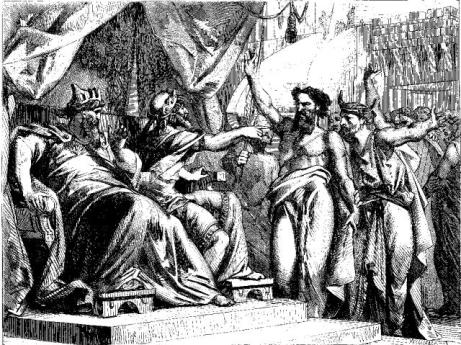
True prophets are not “yes-men” speaking what people want to hear and tickling the ears of unrepentant truth rejecters. True prophets speak truth that hurts and then heals rather than lies that comfort and then kills. However, false prophets are more than happy to be “yes-men” speaking what people want to hear and tickling the ears of unrepentant truth rejecters.
But what the false prophet doesn’t understand is that he is under the judgment of God and is being used by God for the judgment of those who reject His truth. This truth is made plain in the Bible: “For the mystery of lawlessness is already at work; only he who now restrains will do so until he is taken out of the way. Then that lawless one will be revealed whom the Lord will slay with the breath of His mouth and bring to an end by the appearance of His coming; that is, the one whose coming is in accord with the activity of Satan, with all power and signs and false wonders, and with all the deception of wickedness for those who perish, because they did not receive the love of the truth so as to be saved. For this reason God will send upon them a deluding influence so that they will believe what is false, in order that they all may be judged who did not believe the truth, but took pleasure in wickedness” (2 Thessalonians 2:7-12).
This truth is also illustrated in the Bible. We read in 1 Kings 22 about Ahab the king of Israel (the ten northern tribes) wanting to go to war with Aram while he was being visited by Jehoshaphat the king of Judah (the two southern tribes). It is important to remember that before this point Ahab had already been confronted by Elijah on several occasions and had not listened to God’s true prophet. So Ahab who refused to receive and believe the truth surrounded himself with “yes-men” – teachers in accordance to his own desires! Ahab asked Jehoshaphat to go to war with him – “And he said to Jehoshaphat, ‘Will you go with me to battle at Ramoth-gilead?’ And Jehoshaphat said to the king of Israel, ‘I am as you are, my people as your people, my horses as your horses’” (1 Kings 22:4).
However, Jehoshaphat wanted to enquire for the word of the LORD first – “Moreover, Jehoshaphat said to the king of Israel, ‘Please inquire first for the word of the LORD’” (1 Kings 22:5). Then Ahab brought out his “yes-men” – “Then the King of Israel gathered the prophets together, about four hundred men, and said to them, ‘Shall I go against Ramoth-gilead to battle or shall I refrain?’ And they said, ‘Go up, for the LORD will give it into the hand of the king’” (1 Kings 22:6).
“But Jehoshaphat said, ‘Is there not yet a prophet of the LORD here that we may inquire of him?’ The king of Israel said to Jehoshaphat, ‘There is yet one man by whom we may inquire of the LORD, but I hate him, because he does not prophesy good concerning me, but evil. He is Micaiah son of Imlah.’ But Jehoshaphat said, ‘Let not the king say so’ (1 Kings 22:7-8). Ahab hated God’s true prophet because he was not a “yes-man” with a positive only word from the Lord. Ahab considered truth as evil because it was not what he wanted to hear!
So while Ahab and Jehoshaphat sat on their thrones listening to all the prophets who were prophesying before them, Ahab sent an officer to bring Micaiah so that they could hear from him. And all of Ahab’s prophets were prophesying “good” saying, “Go up to Ramoth-gilead and prosper, for the LORD will give it into the hand of the king” (see 1 Kings 22:9-12).
“Then the messenger who went to summon Micaiah spoke to him saying, ‘Behold now, the words of the prophets are uniformly favorable to the king. Please let your be like the word of one of them, and speak favorably.’ But Micaiah said, ‘As the LORD lives, what the LORD says to me, that I shall speak’” (1 Kings 22:13-14). The pressure was on for Micaiah to be a “yes-man” speaking lies that comfort but kill and he refused.
“When he came to the king, the king said to him, ‘Micaiah, shall we go to Ramoth-gilead to battle or shall we refrain?’ And he answered him, ‘Go up and succeed, and the LORD will give it into the hand of the king’” (1 Kings 22:15). Micaiah was speaking with sarcasm knowing that the king wasn’t interested in truth to which the king replied, “How many times must I adjure you to speak to me nothing but the truth in the name of the LORD?” (1 Kings 22:16).
“So he said, ‘I saw all Israel scattered on the mountains, like sheep which have no shepherd. And the Lord said, “These have no master. Let each of them return to his house in peace’” (1 Kings 22:17). “Then the king of Israel said to Jehoshaphat, ‘Did I not tell you that he would not prophesy good concerning me, but evil?’” (1 Kings 22:18)
But wait! Micaiah wasn’t through – he went on to tell Ahab the whole purpose of God – “Micaiah said, ‘Therefore, hear the word of the LORD. I saw the Lord sitting on His throne, and all the host of heaven standing by Him on His right and on His left. The Lord said, “Who will entice Ahab to go up and fall at Ramoth-gilead?” And one said this while another said that. Then a spirit came forward and stood before the LORD and said, “I will entice him.” The Lord said to him, “How?” And he said, “I will go out and be a deceiving spirit in the mouth of all his prophets.” Then He said, “You are to entice him and also prevail. Go and do so.” Now therefore, behold, the LORD has put a deceiving spirit in the mouth of all these your prophets; and the LORD has proclaimed disaster against you’” (1 Kings 22:19-23).
Beware of heaping “yes-men” to yourselves who only speak “good” and tell you what you want to hear - for they come with all the deception of wickedness for those who perish, because they did not receive the love of the truth so as to be saved. For this reason God will send upon them a deluding influence so that they will believe what is false, in order that they all may be judged who did not believe the truth, but took pleasure in wickedness.
But what the false prophet doesn’t understand is that he is under the judgment of God and is being used by God for the judgment of those who reject His truth. This truth is made plain in the Bible: “For the mystery of lawlessness is already at work; only he who now restrains will do so until he is taken out of the way. Then that lawless one will be revealed whom the Lord will slay with the breath of His mouth and bring to an end by the appearance of His coming; that is, the one whose coming is in accord with the activity of Satan, with all power and signs and false wonders, and with all the deception of wickedness for those who perish, because they did not receive the love of the truth so as to be saved. For this reason God will send upon them a deluding influence so that they will believe what is false, in order that they all may be judged who did not believe the truth, but took pleasure in wickedness” (2 Thessalonians 2:7-12).
This truth is also illustrated in the Bible. We read in 1 Kings 22 about Ahab the king of Israel (the ten northern tribes) wanting to go to war with Aram while he was being visited by Jehoshaphat the king of Judah (the two southern tribes). It is important to remember that before this point Ahab had already been confronted by Elijah on several occasions and had not listened to God’s true prophet. So Ahab who refused to receive and believe the truth surrounded himself with “yes-men” – teachers in accordance to his own desires! Ahab asked Jehoshaphat to go to war with him – “And he said to Jehoshaphat, ‘Will you go with me to battle at Ramoth-gilead?’ And Jehoshaphat said to the king of Israel, ‘I am as you are, my people as your people, my horses as your horses’” (1 Kings 22:4).
However, Jehoshaphat wanted to enquire for the word of the LORD first – “Moreover, Jehoshaphat said to the king of Israel, ‘Please inquire first for the word of the LORD’” (1 Kings 22:5). Then Ahab brought out his “yes-men” – “Then the King of Israel gathered the prophets together, about four hundred men, and said to them, ‘Shall I go against Ramoth-gilead to battle or shall I refrain?’ And they said, ‘Go up, for the LORD will give it into the hand of the king’” (1 Kings 22:6).
“But Jehoshaphat said, ‘Is there not yet a prophet of the LORD here that we may inquire of him?’ The king of Israel said to Jehoshaphat, ‘There is yet one man by whom we may inquire of the LORD, but I hate him, because he does not prophesy good concerning me, but evil. He is Micaiah son of Imlah.’ But Jehoshaphat said, ‘Let not the king say so’ (1 Kings 22:7-8). Ahab hated God’s true prophet because he was not a “yes-man” with a positive only word from the Lord. Ahab considered truth as evil because it was not what he wanted to hear!
So while Ahab and Jehoshaphat sat on their thrones listening to all the prophets who were prophesying before them, Ahab sent an officer to bring Micaiah so that they could hear from him. And all of Ahab’s prophets were prophesying “good” saying, “Go up to Ramoth-gilead and prosper, for the LORD will give it into the hand of the king” (see 1 Kings 22:9-12).
“Then the messenger who went to summon Micaiah spoke to him saying, ‘Behold now, the words of the prophets are uniformly favorable to the king. Please let your be like the word of one of them, and speak favorably.’ But Micaiah said, ‘As the LORD lives, what the LORD says to me, that I shall speak’” (1 Kings 22:13-14). The pressure was on for Micaiah to be a “yes-man” speaking lies that comfort but kill and he refused.
“When he came to the king, the king said to him, ‘Micaiah, shall we go to Ramoth-gilead to battle or shall we refrain?’ And he answered him, ‘Go up and succeed, and the LORD will give it into the hand of the king’” (1 Kings 22:15). Micaiah was speaking with sarcasm knowing that the king wasn’t interested in truth to which the king replied, “How many times must I adjure you to speak to me nothing but the truth in the name of the LORD?” (1 Kings 22:16).
“So he said, ‘I saw all Israel scattered on the mountains, like sheep which have no shepherd. And the Lord said, “These have no master. Let each of them return to his house in peace’” (1 Kings 22:17). “Then the king of Israel said to Jehoshaphat, ‘Did I not tell you that he would not prophesy good concerning me, but evil?’” (1 Kings 22:18)
But wait! Micaiah wasn’t through – he went on to tell Ahab the whole purpose of God – “Micaiah said, ‘Therefore, hear the word of the LORD. I saw the Lord sitting on His throne, and all the host of heaven standing by Him on His right and on His left. The Lord said, “Who will entice Ahab to go up and fall at Ramoth-gilead?” And one said this while another said that. Then a spirit came forward and stood before the LORD and said, “I will entice him.” The Lord said to him, “How?” And he said, “I will go out and be a deceiving spirit in the mouth of all his prophets.” Then He said, “You are to entice him and also prevail. Go and do so.” Now therefore, behold, the LORD has put a deceiving spirit in the mouth of all these your prophets; and the LORD has proclaimed disaster against you’” (1 Kings 22:19-23).
Beware of heaping “yes-men” to yourselves who only speak “good” and tell you what you want to hear - for they come with all the deception of wickedness for those who perish, because they did not receive the love of the truth so as to be saved. For this reason God will send upon them a deluding influence so that they will believe what is false, in order that they all may be judged who did not believe the truth, but took pleasure in wickedness.
Subscribe to:
Posts (Atom)